

Conceptualizing Mothers in Art & Writing
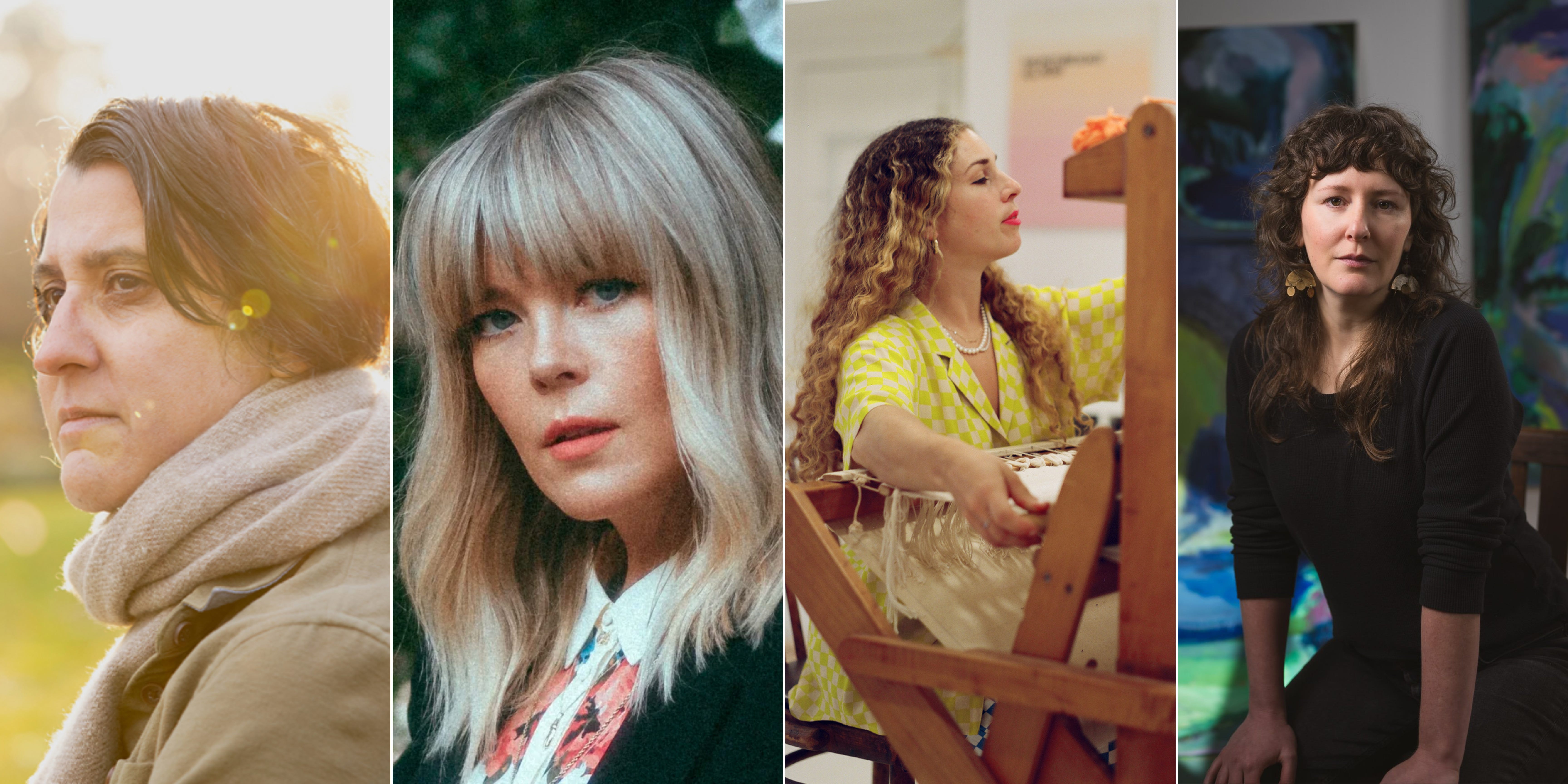
with Frances Badalamenti, Chelsea Bieker, Francesca Capone, and Anya Roberts-Toney

Join us for our event: Conceptualizing Mothers in Art & Writing at Deep Waters on May 10th from 4-6pm. Tickets are $8 and can be purchased here.
Note: This is an extra-long post. If you’re reading it from your email, click here to read it uninterrupted.
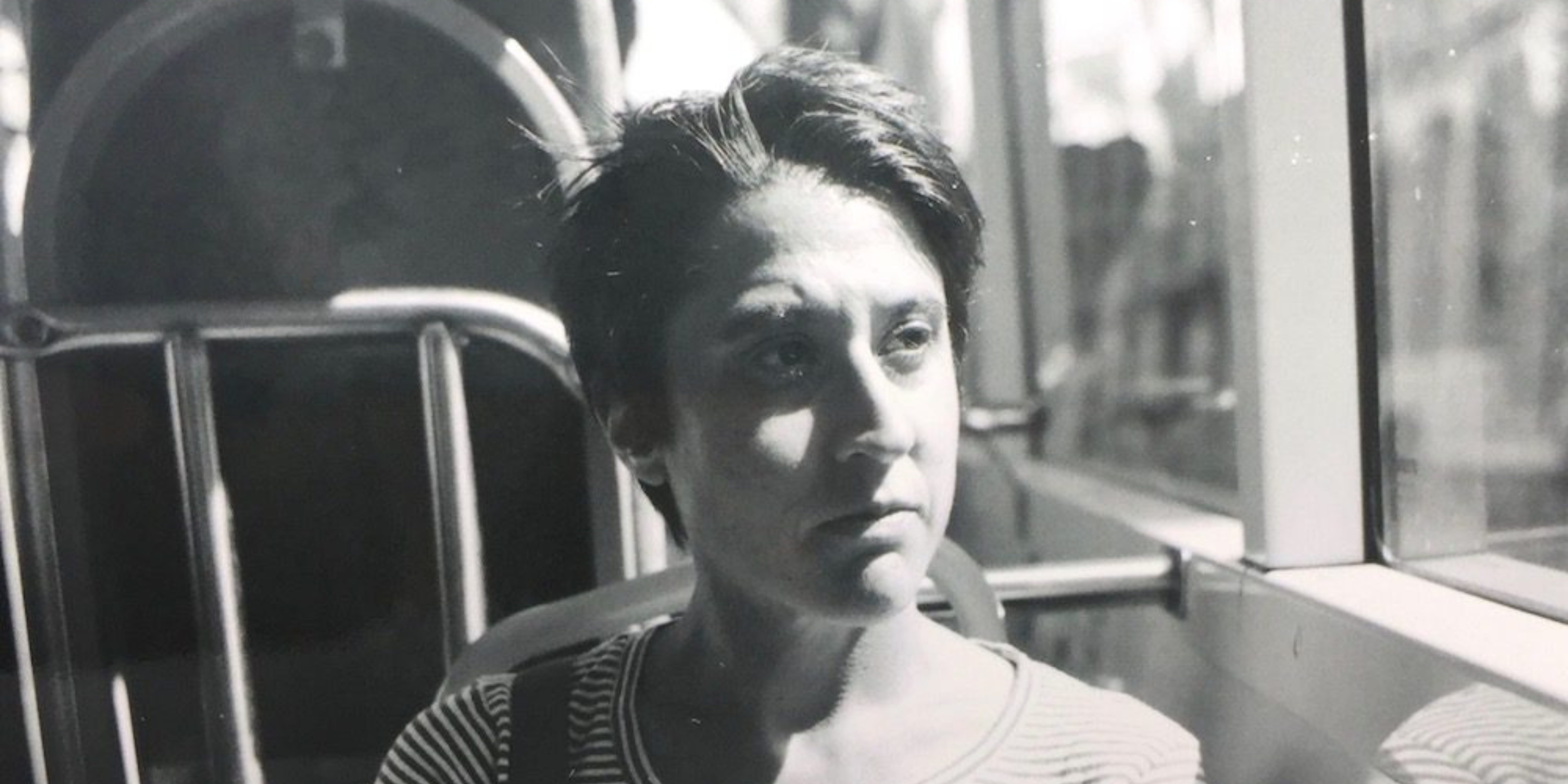
FRANCES BADALAMENTI holds a master’s degree in counseling psychology and practiced as a psychotherapist in both community mental health and private practice settings before writing her first book, I Don’t Blame You. That book began as a memoir about losing her mother a mere two months before becoming a mother, a means of working through the emotions of both grief and joy. In the end, she decided to publish that book as a novel to veil the narrative. That process of turning truth into fiction was the first phase of what would compel her towards the fictional devices that she found in her second book, Salad Days, a 90s coming-of-age story about a twenty-something, misguided bartender who works at an independent music venue on the Jersey side of the Hudson. It is the story of a very brief first marriage that brought her out to Portland, where that relationship quickly fell apart and a new one began. She considers Salad Days to be a work of autobiographical fiction.
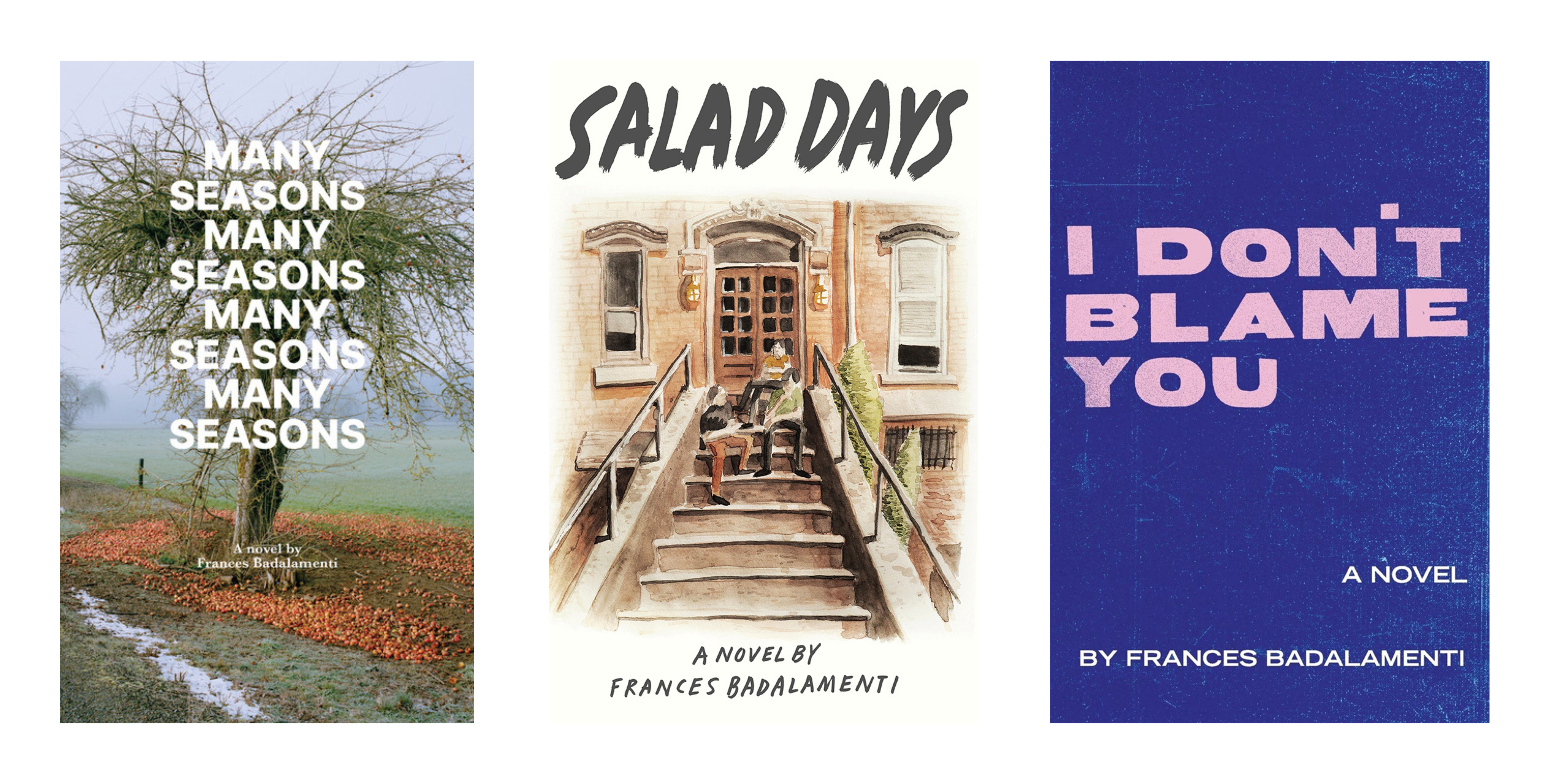
In addition to her books, Frances continues to write and publish personal essays, short fiction, and interviews, some of which have appeared in The New Yorker, The Believer Magazine, BOMB Magazine, Longreads, Vol.1 Brooklyn, Mutha Magazine, The Rumpus and Buckman Journal.
Frances lives in Portland, Oregon, where she mentors writers and teaches writing workshops with the local nonprofit, Literary Arts, and other organizations.
She is the author of Many Seasons published by Buckman Publishing in November 2024. Many Seasons acts like a skein, an elaborate tangle unraveling and being rewound. This story and the self inside it must get undone in order to be seen and reassembled. Just as personhood is non-linear, memory mingles with moment and matter-of-fact presents the formidable questions: Are attachments a reward or a burden? Ana, our protagonist, excavates generations of familial patterns and interrupts them in her own evolving family. She critiques motherhood while enacting it, discovers her gender as she observes it through her writing, and questions her relationships while staying in them. Many Seasons is really about being known; coming to terms with the fact that the richest part of us, one’s interior, may go unknown except to itself. And perhaps, in this case, to the page. By keeping her own narrative, Ana makes a record of renewal, recovery, domestic labor, and anxiety. She shows us that healing is a threshold and a path, that selfhood is a grand, nesting landscape, and that much like home, it is a shelter made by effort, devotion.
Read an essay by Frances Badalamenti on auto-fiction: A Woman’s Search for Meaning: On Motherhood and Writing the Self.
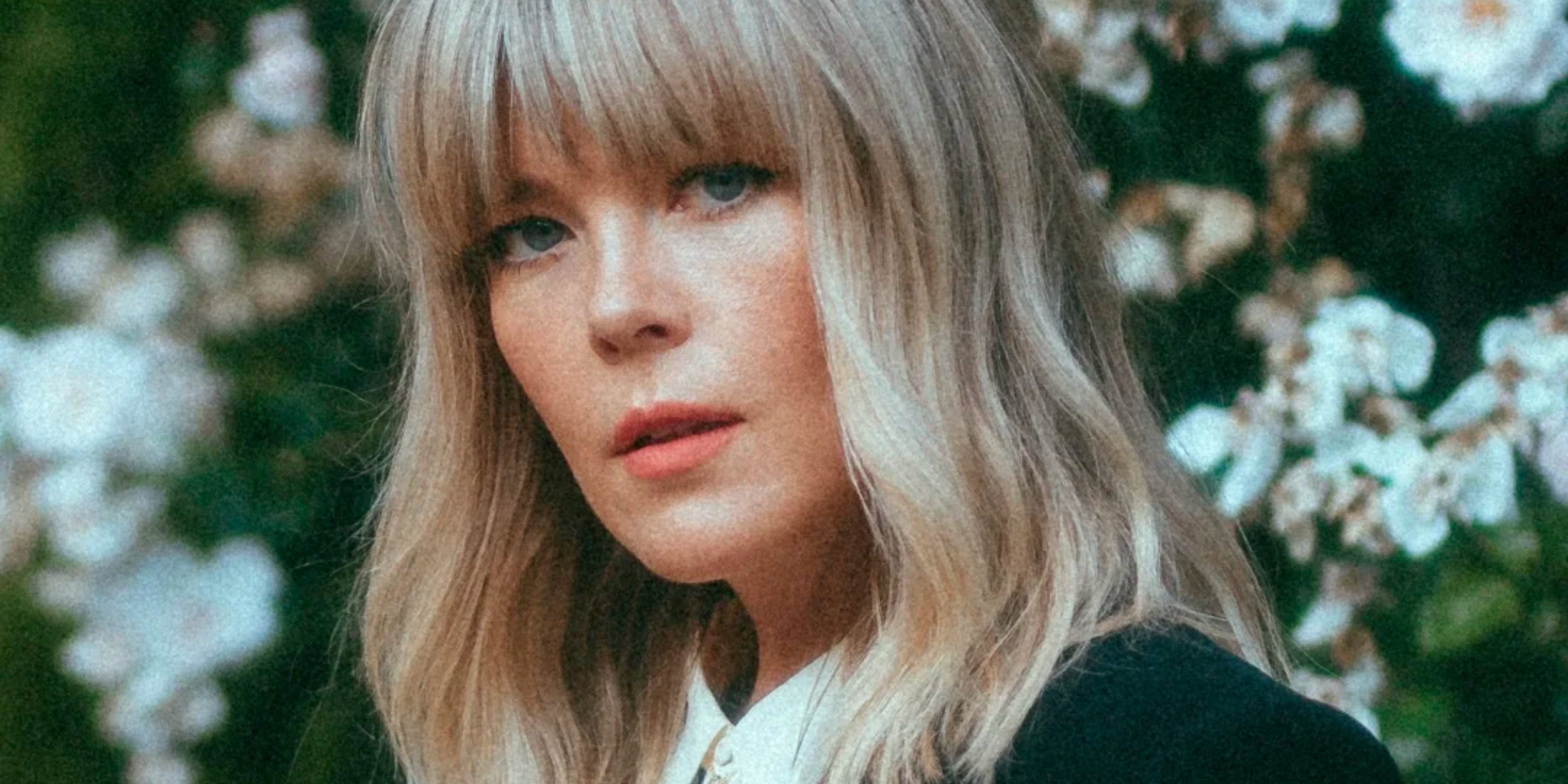
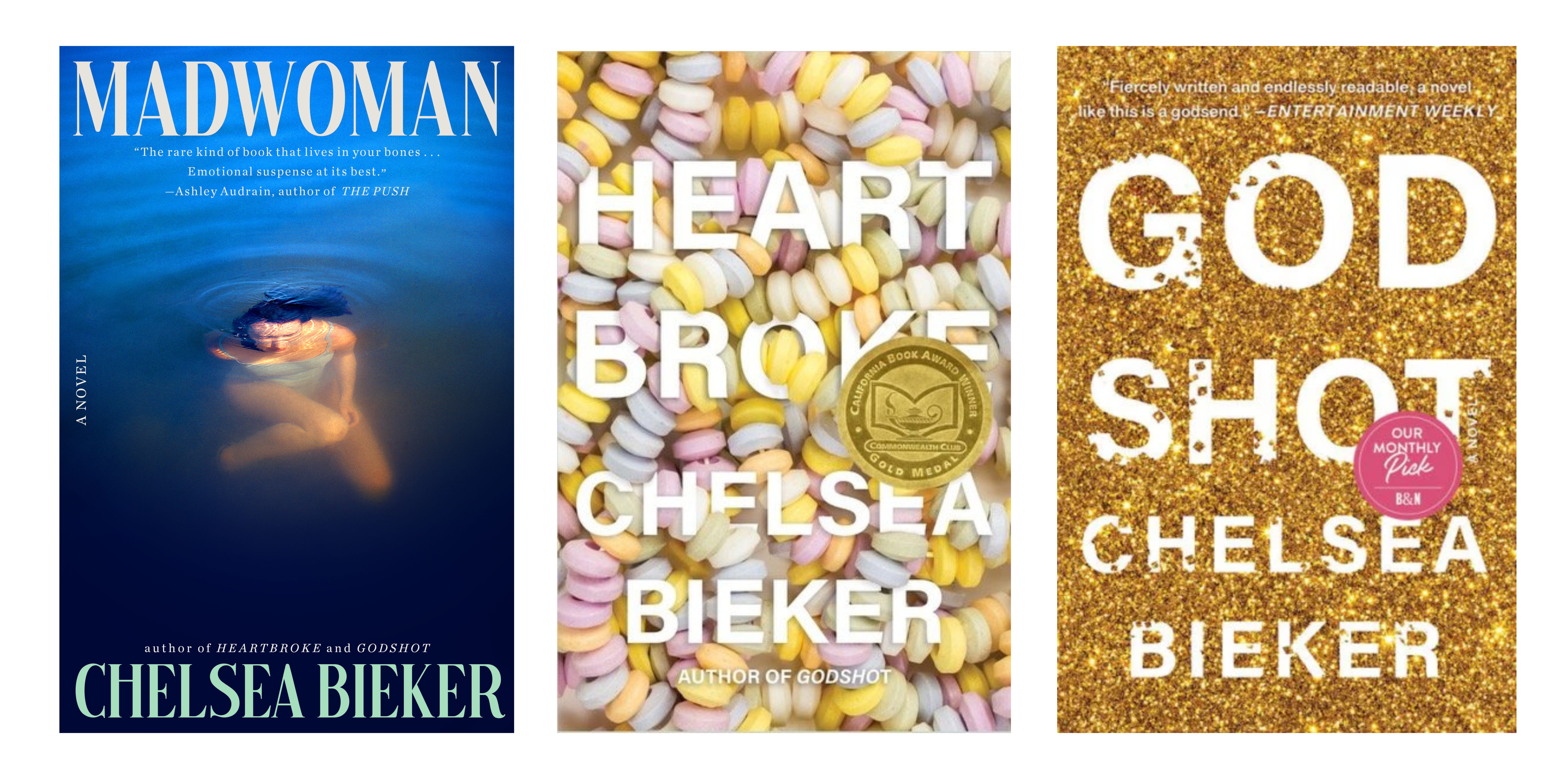
CHELSEA BIEKER is the California Book Award-winning author of three books, most recently the national bestselling novel, Madwoman, a Book of the Month club pick the New York Times calls “brilliant in its depiction of the long shadows cast by domestic violence.” Named a best book of the year by NPR, Oprah, Elle, and longlisted for the Aspen Words Literary Prize. Her first novel, Godshot, was longlisted for The Center For Fiction’s First Novel Prize and named a Barnes & Noble Pick of the Month. Her story collection, Heartbroke won the California Book Award and was a New York Times Best Book of the year. Her writing has appeared in The Paris Review, Marie Claire UK, People, The Cut, Wall Street Journal, No Tokens, and others. She is the recipient of a Rona Jaffe Writers’ Award and an Oregon Literary Arts Fellowship, as well as residencies from MacDowell and Tin House.
Raised in Hawai’i and California, she now lives in Portland, Oregon with her husband and two children where she is the co-creator of The Fountain with the writer Kimberly King Parsons, writes about creative practice at her Substack, Make Up Your Life, and is at work on a new novel.
Read Chelsea’s responses to Cheryl Strayed’s questions on her Substack Dear Sugar:

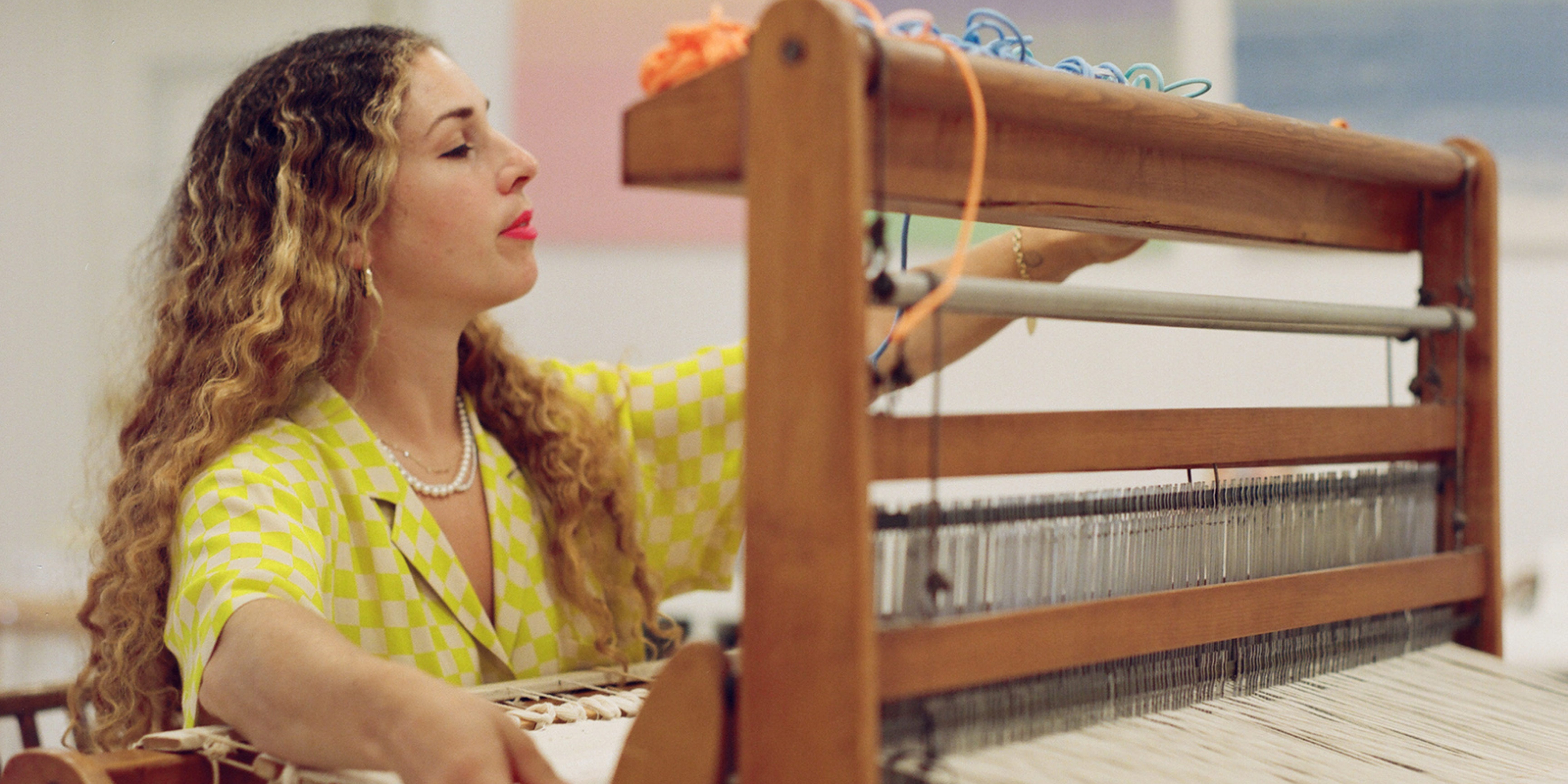
FRANCESCA CAPONE is a materials designer, visual artist, writer, and educator. Her work is primarily concerned with the creation of materials and a poetic consideration of their meaning. She is interested in how tactile forms simultaneously serve as functional surfaces for daily life and as a mode of communication or symbol within the cultural paradigm.
Her interdisciplinary practice takes the shape of visual art exhibitions, readings/performances, and books. Her books Woven Places (Some Other Books, 2018), Text means Tissue (2017), and Weaving Language (Self-Published, 2015) focus on textile poetics. They are in the collections at the MoMA Library and the Watson Library at the Metropolitan Museum of Art. She has exhibited at Whitechapel Gallery in London, LUMA/Westbau in Switzerland, Textile Arts Center in NYC, and 99¢ Plus Gallery in Brooklyn. She has been an artist in residence at the Josef and Anni Albers Foundation and Andrea Zittel's A-Z West. Her academic work includes lectures and workshops at Brown University, Rhode Island School of Design, Reed College, University of Washington, and Alberta College of Art and Design, among others. She joined Nationale as a represented artist in 2018.
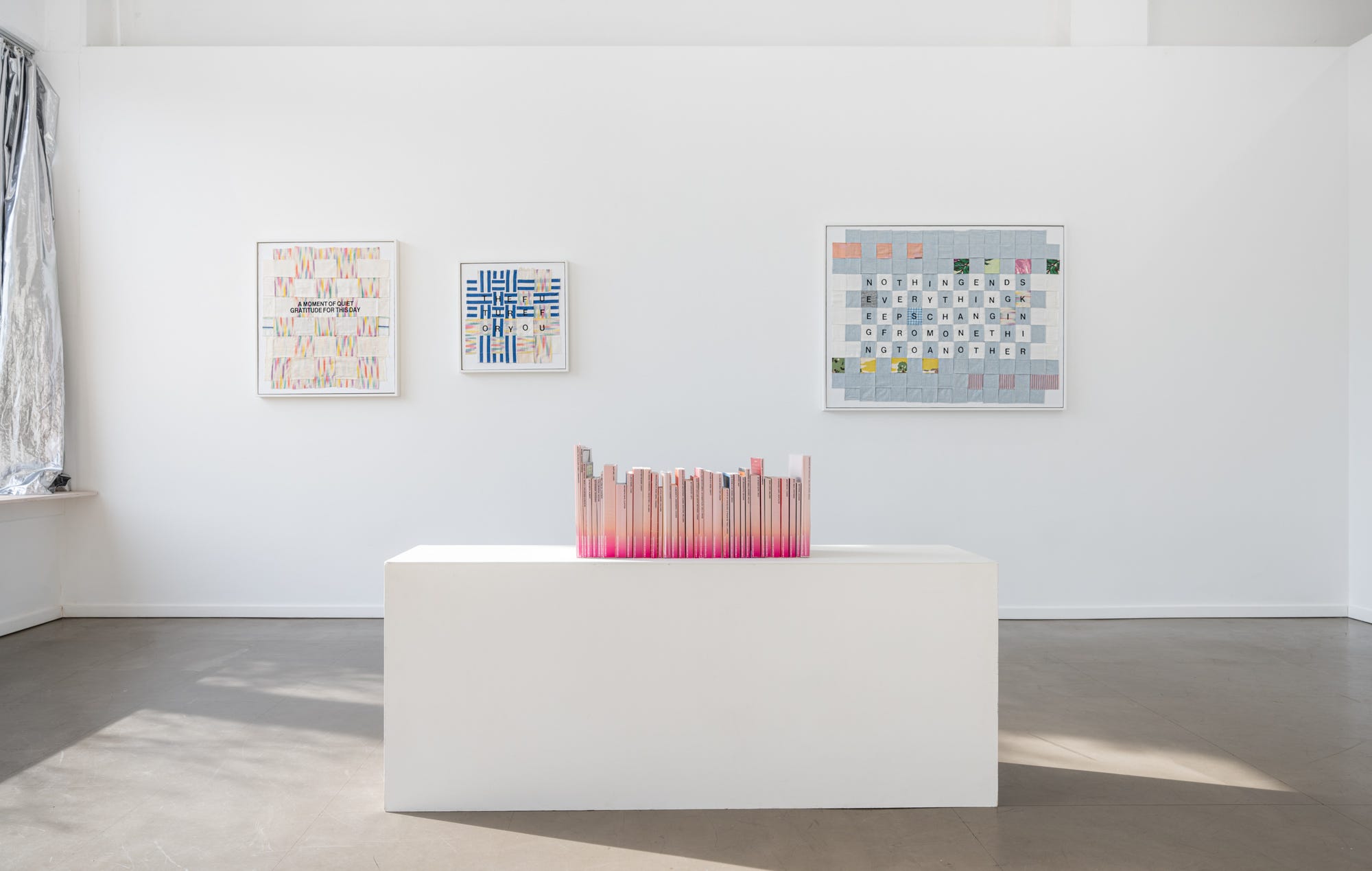
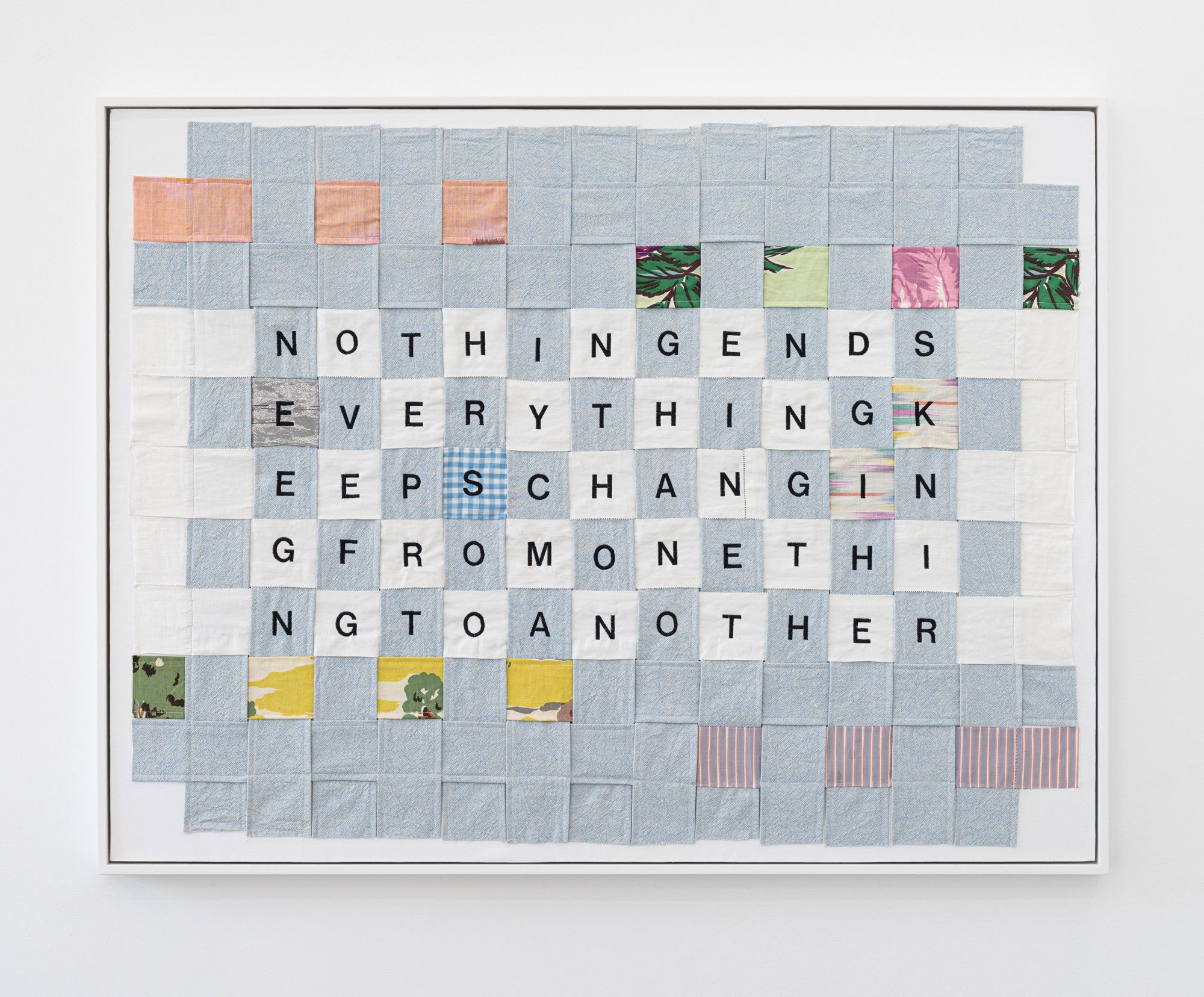
“A Mother’s Discourse open[ed] April 13, 2024 and combines Capone’s trademark use of fabric, language, and research to expand on the complicated topic of motherhood. The weavings displayed in the front gallery and the bookshop favor soft gradients, hints of domestic patterns, and sharp truisms that together brave a poignant dialogue. A first-time mother observing a post Roe v. Wade reality, Capone became concerned by the rapidly devolving lack of social resources available to new families in the United States. A linguist at heart, her focus turned toward books in search of comfort. As she read, she found a kindred community in literature narrating deeply personal experiences of child-rearing.
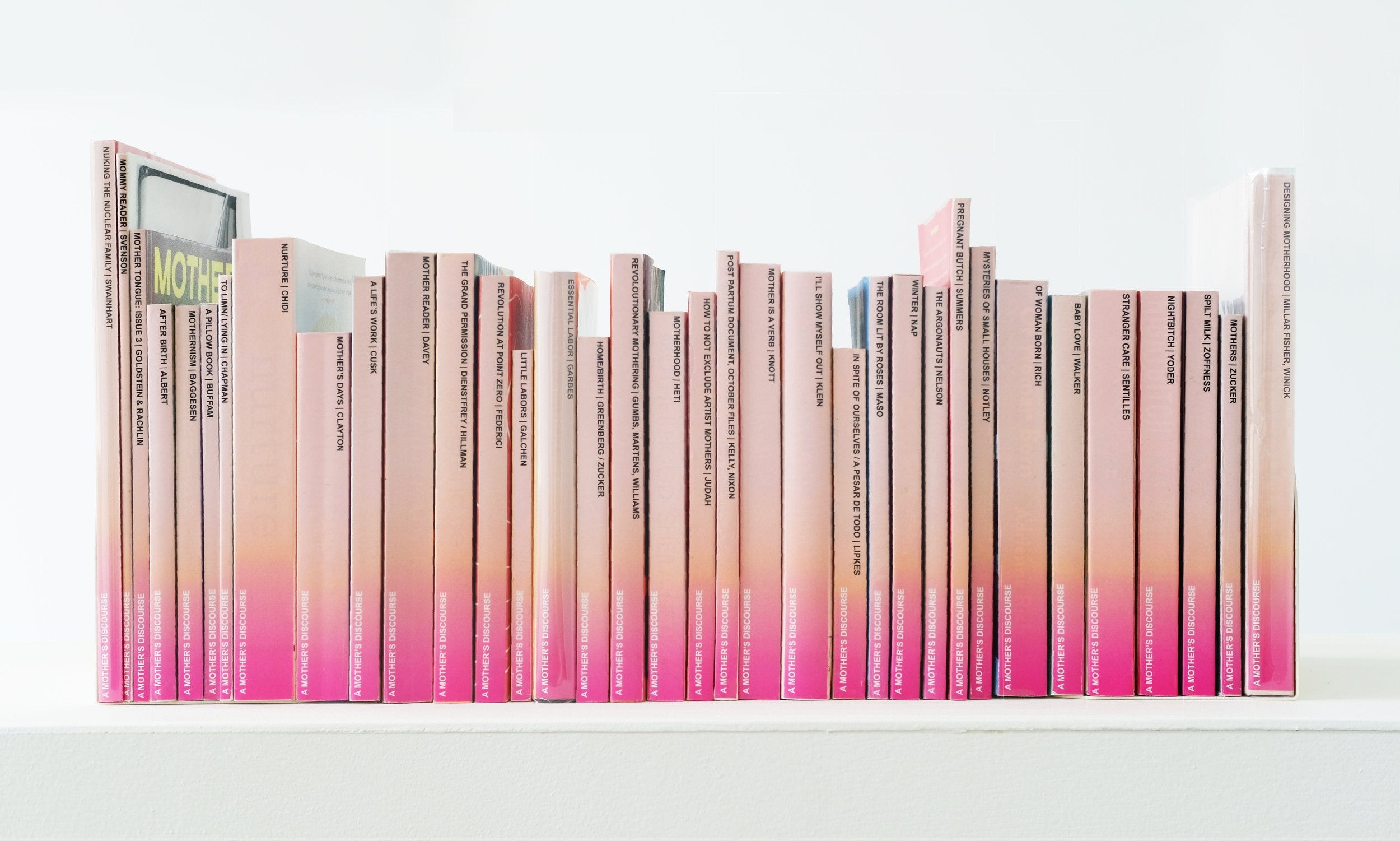
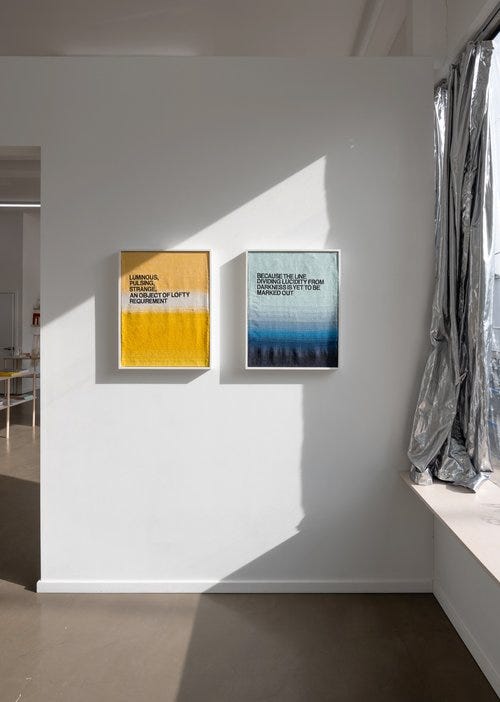
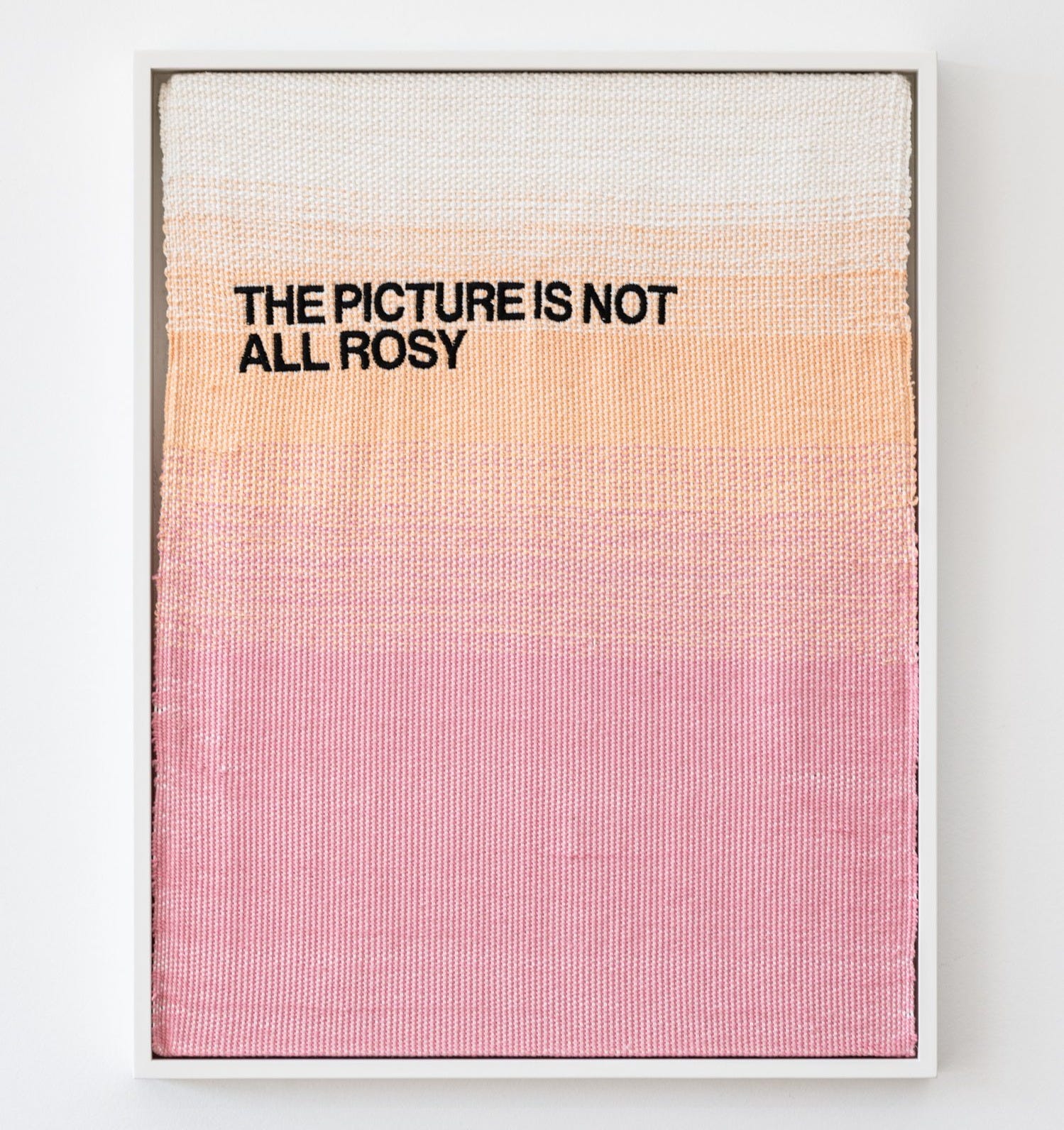
This exhibition presents as an abstracted metaphor for the maternal in four sections: a range of colormap weavings; gridded composites of heirloom fabric; a cento poem; and an archive library, now spanning 35 books. Each framed textile piece reveals a quote embroidered on its surface and sourced from one of the longform written works Capone has collected over the past few years. Luminous, pulsing, strange (Cusk) and The picture is not all rosy (Suleiman) are two examples of earlier weavings. Here, the tonal gradients appearing with each pass of the shuttle could be interpreted as a soft parallel to the transitions Capone experienced as her child passed through early infancy. The inclusion of a penned phrase outside of its original context invites an immediate interaction from the viewer to decipher its unique intention.
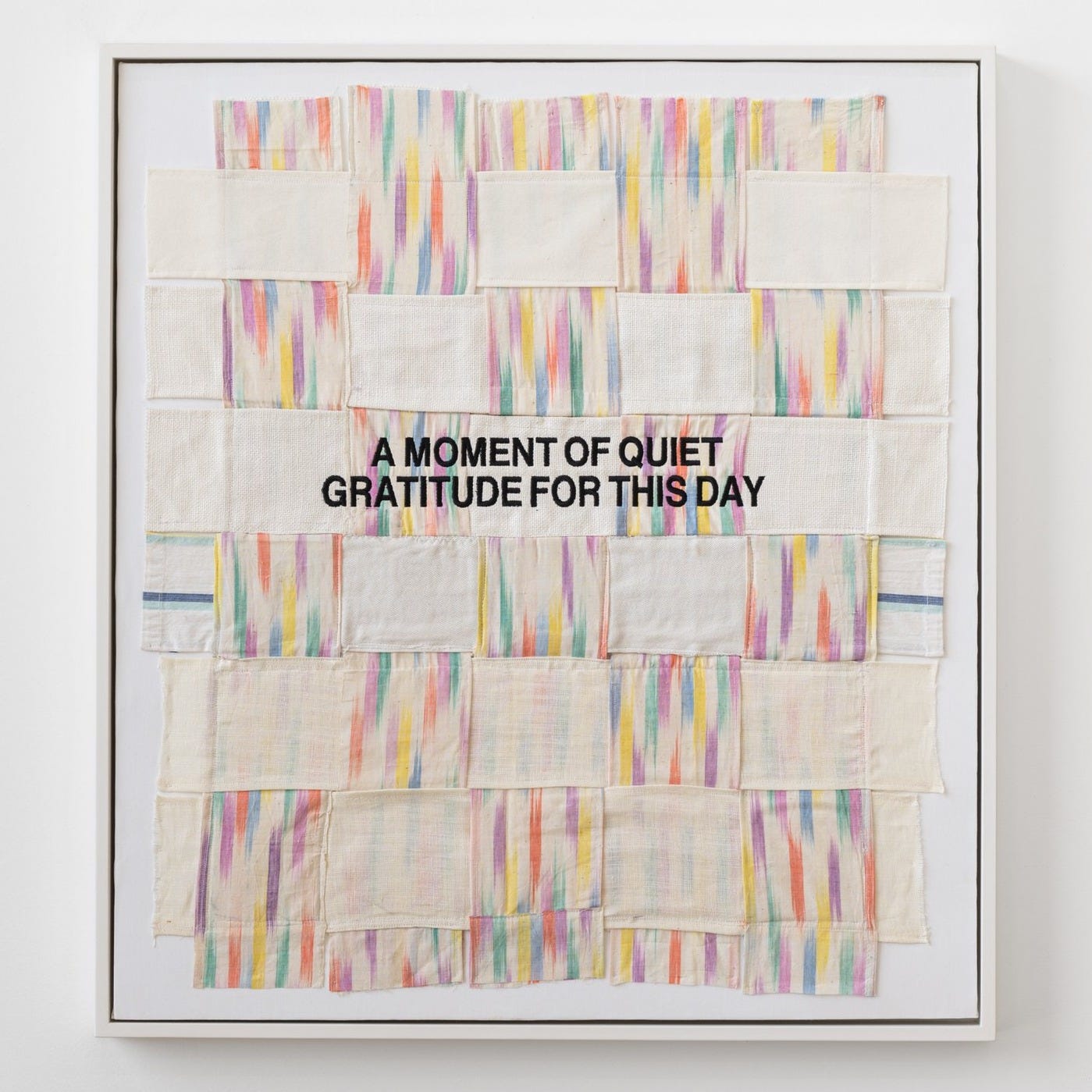
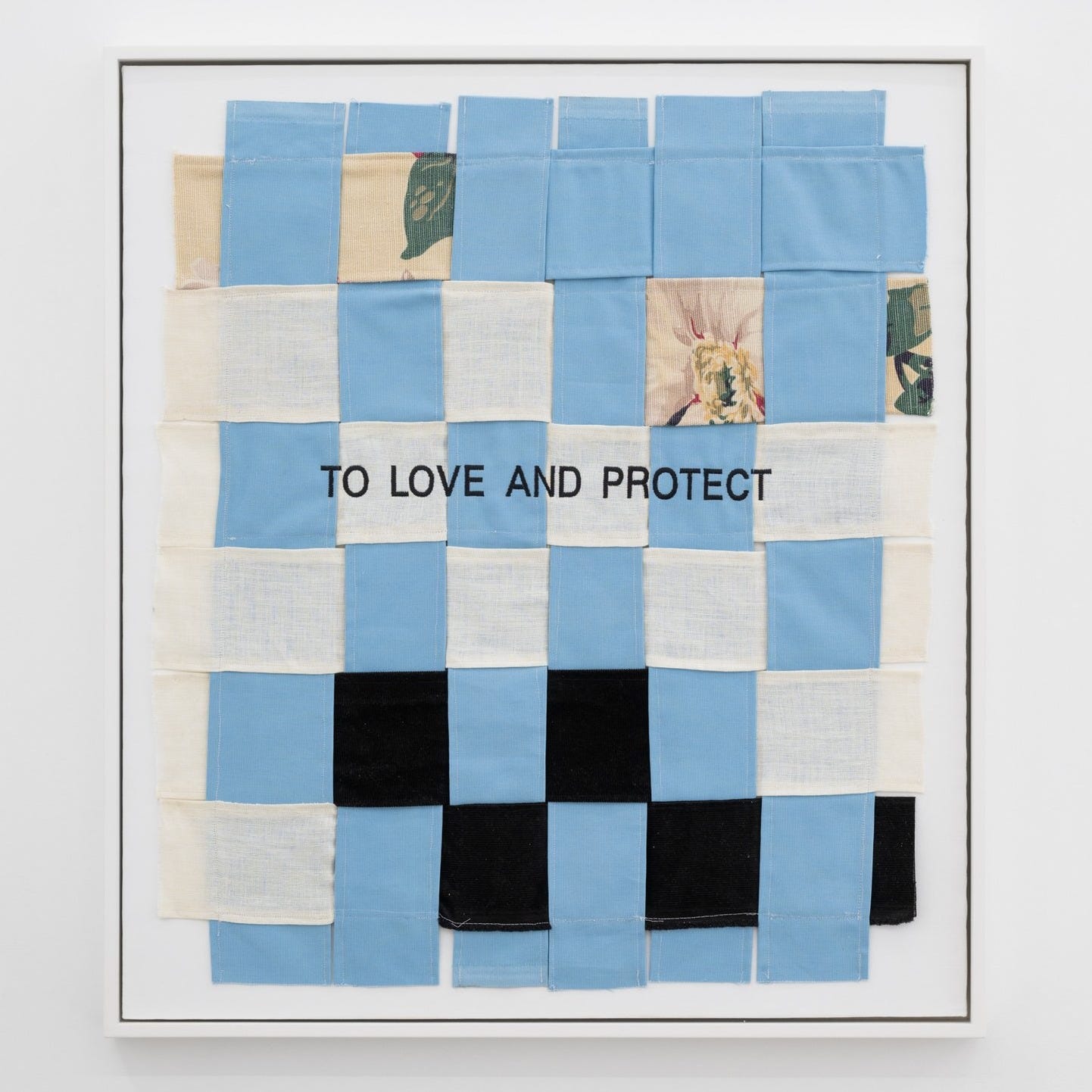
As her son became more mobile, Capone too expanded more fully into her practice. She began by hand-weaving strips of maternal fabric scraps to form new canvases addressing her pressing concerns. These textiles were passed down from her multigenerational family of Sicilian-American fashion industry workers. Pieces such as A moment of quiet (Clayton) and To love and protect (Emecheta) are smaller records of a similar intention, akin to promises whispered to a loved one. These embroidered lines span across the gallery walls in quiet reverence for the weight of the written word. Mantras such as “a visitation from angels” and “the future for you” read as gentle stitches in time that capture the varied nuances of early motherhood. Twined together they make up the complete poem A Mother’s Discourse: Cento, which hangs printed on translucent, silk chiffon. For viewers eager to engage the texts in full, the archive of books accompanies this collection, spines dusted in gradual hues of pink.
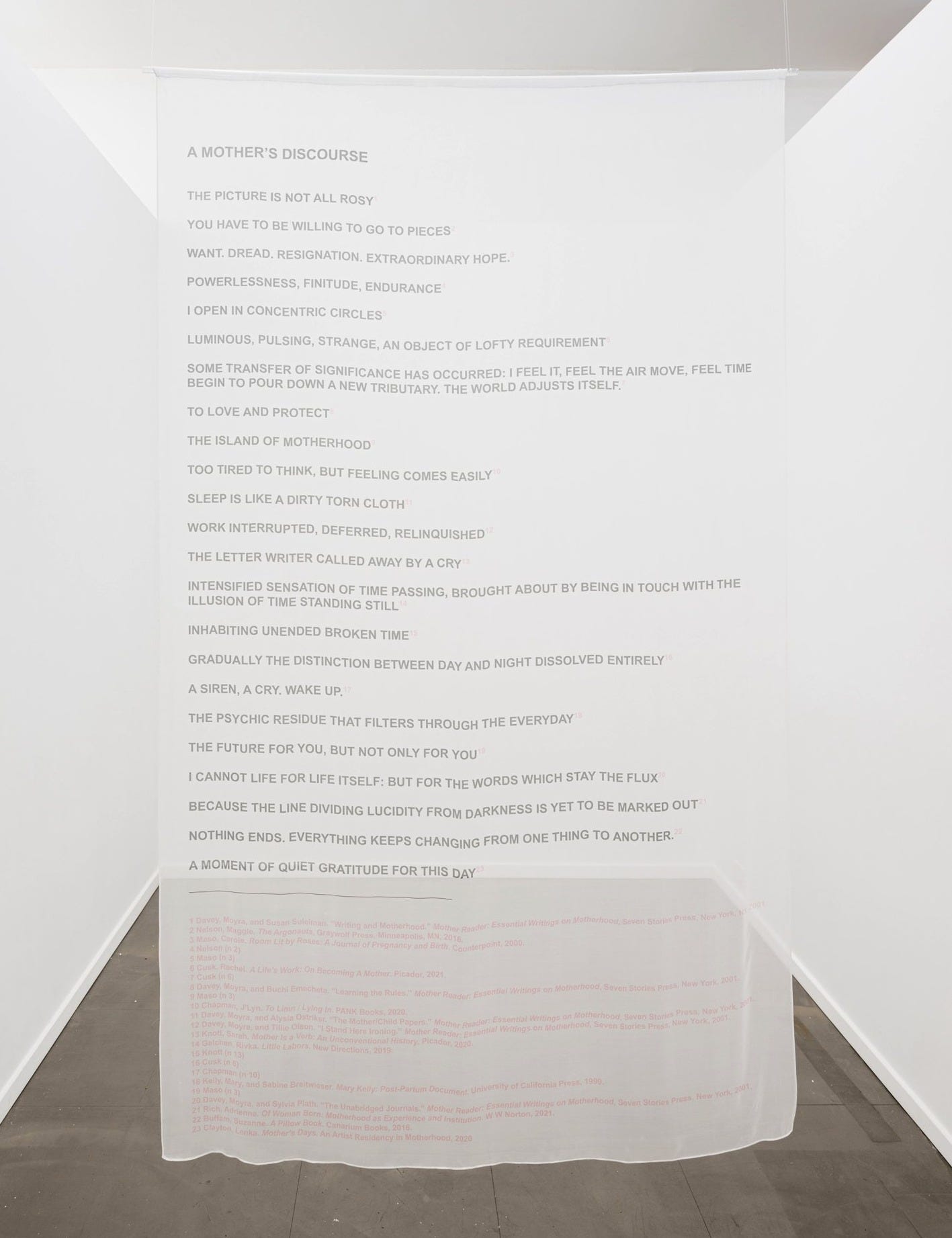
In its entirety, A Mother’s Discourse intimately enmeshes text and textile to give voice to an emotionally complex and shared experience. Capone has capably created a soft protest to the current landscape for mothers and new families, imbuing every stage with a warm familiarity for maker and viewer alike.” —Luiza Lukova, Press Release via Nationale
Photos by Mario Gallucci, courtesy of Nationale.
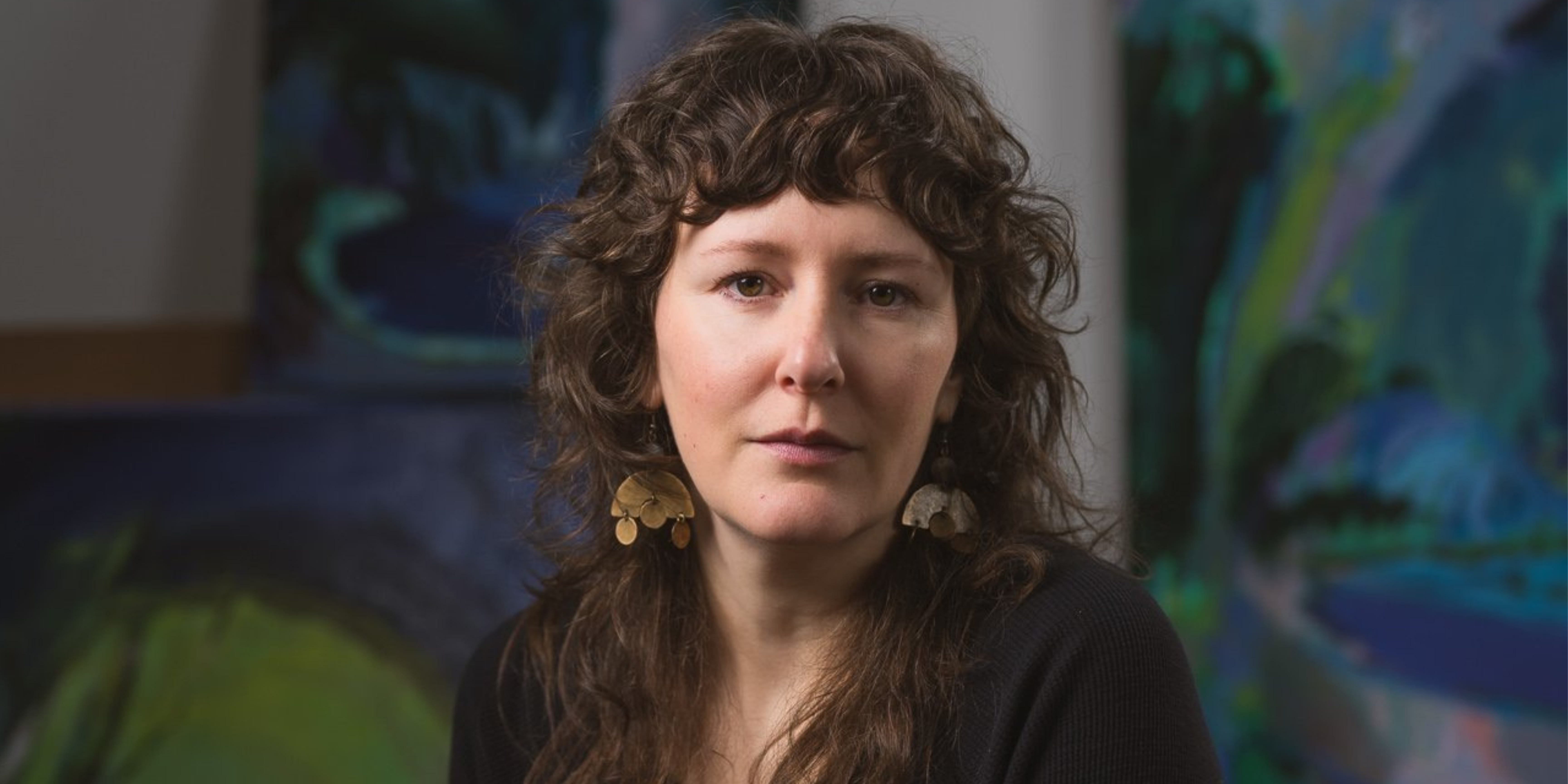
ANYA ROBERTS-TONEY’s oil paintings and works on paper explore feminine power and desire for connection with a feminine-charged landscape. Her work is included in the permanent collections of the Portland Art Museum and Soho House, has been presented on Platform (a David Zwirner Project), and has been exhibited locally and nationally at locations including Disjecta Contemporary Art Center (now Oregon Contemporary), Nationale, Dust to Dust Projects, La Loma Projects, The Portland Pataphysical Society, the Office at Russo Lee, Somos Gallery, and Stephanie Chefas Projects. She is a winner of the Hopper Prize, a recipient of both a Photography Documentation Grant and a Career Opportunity Grant from the Oregon Arts Commission (with additional funding from the Ford Family Foundation), and a recipient of the Stumptown Artist Fellowship. Roberts-Toney received her BA in Studio Art from Brown University and her MFA in Visual Studies from Pacific Northwest College of Art. Originally from Seattle, WA, she lives and works in Portland, OR, where she is represented by Nationale. Her current show The Echoing Green is on display through May 10th.
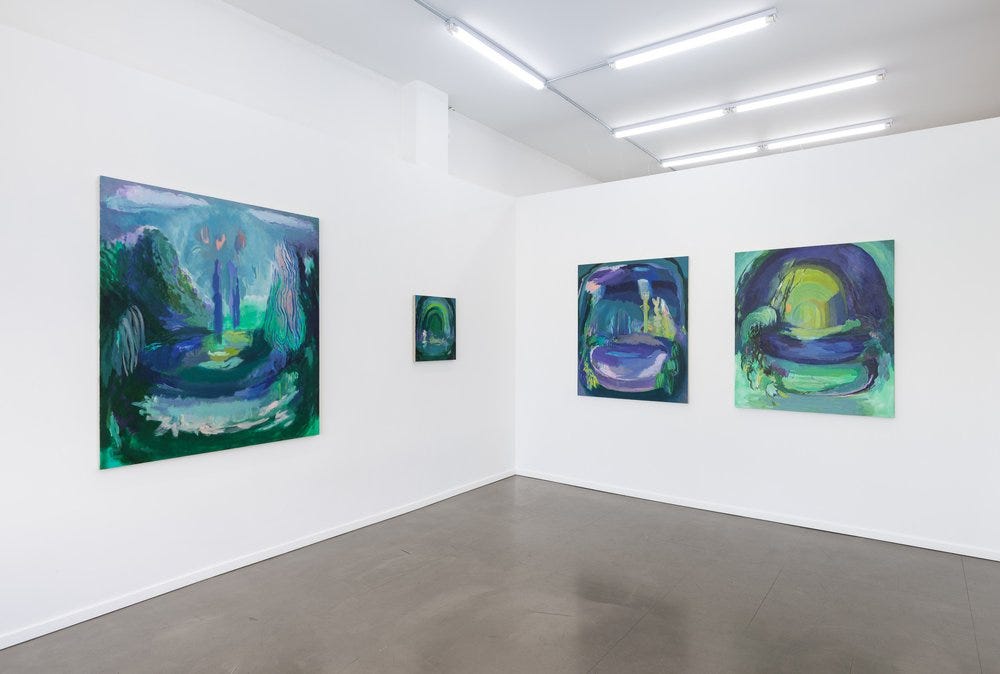
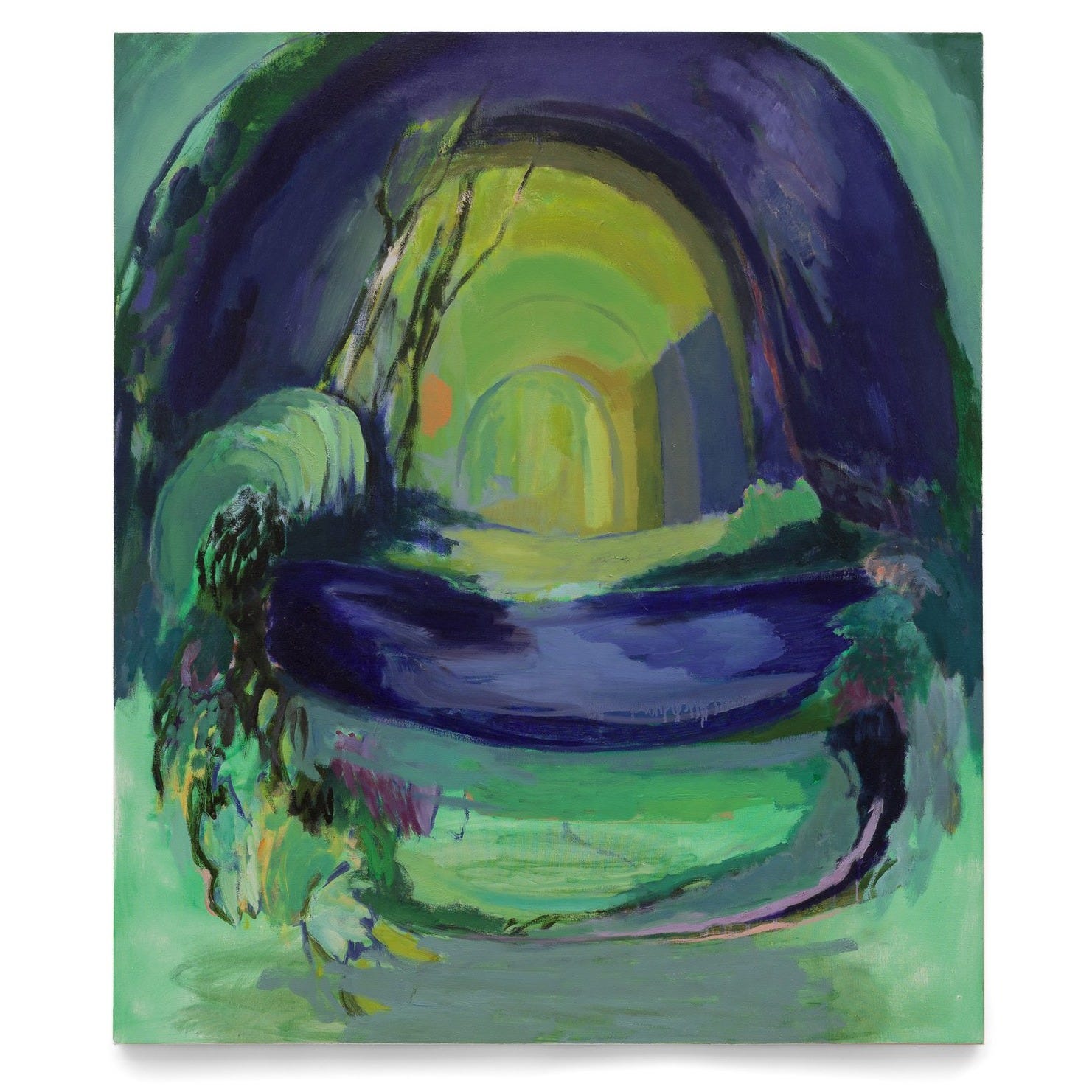
“The title of the artist’s fourth solo exhibition with the gallery alludes to William Blake’s poem by the same name, which recounts and intertwines memories of the outdoors and youthful exuberance. At the poem’s close, the green has shifted from echoing to darkening as the sun sets—a visceral allusion to the passage of time. The twenty paintings on display in the Front Gallery and Project Room emulate these feelings on mortality and the future, and reference the artist's ongoing inquiry into feminine power, motherhood, and the natural world. Lush blues, purples, and greens give way to Roberts-Toney’s distinctive motifs of portals, archways, and pools of water. These repeated images present as opaque and mysterious yet ever-present across the work, marrying the anxiety of the unknown with an enduring sense of perseverance and strength.
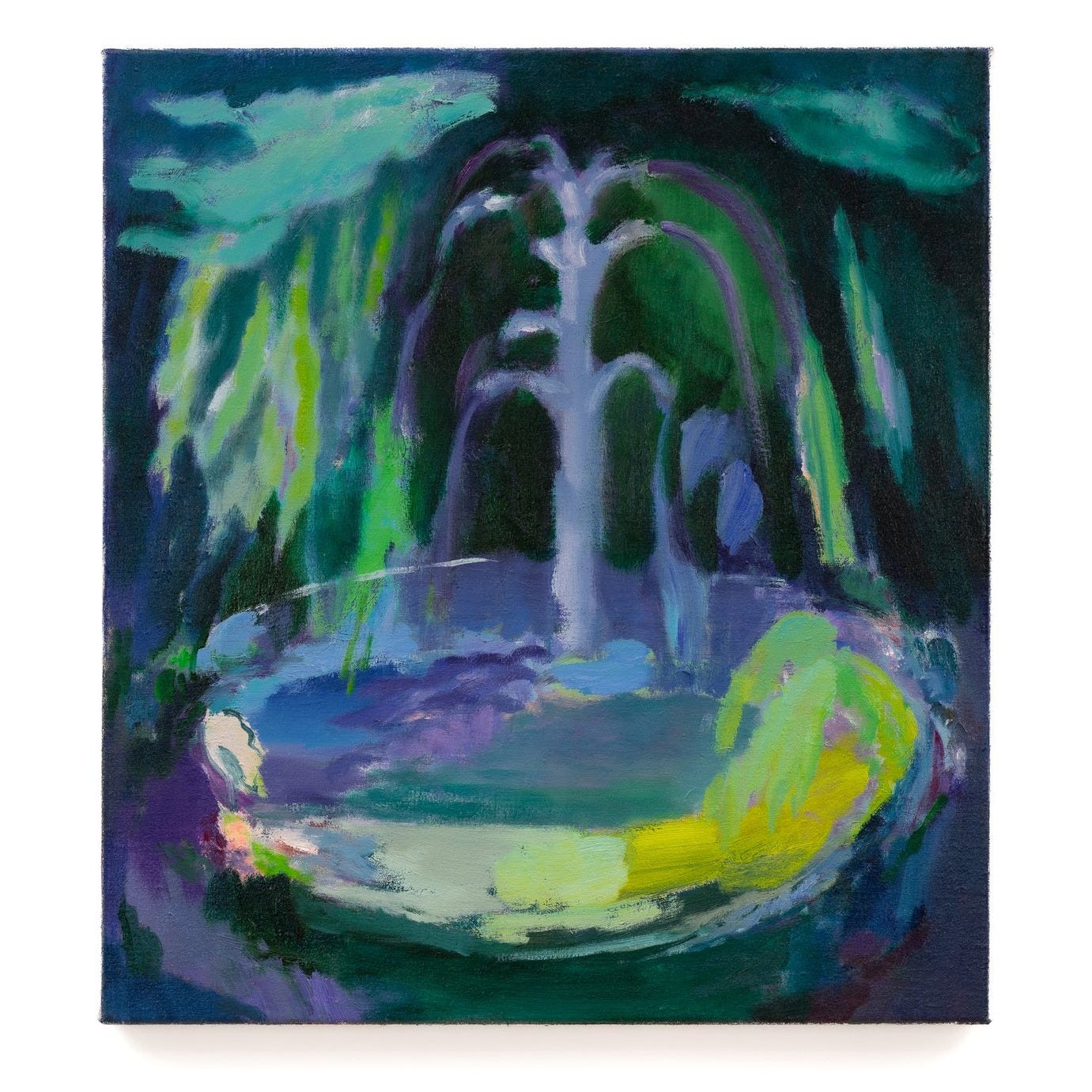
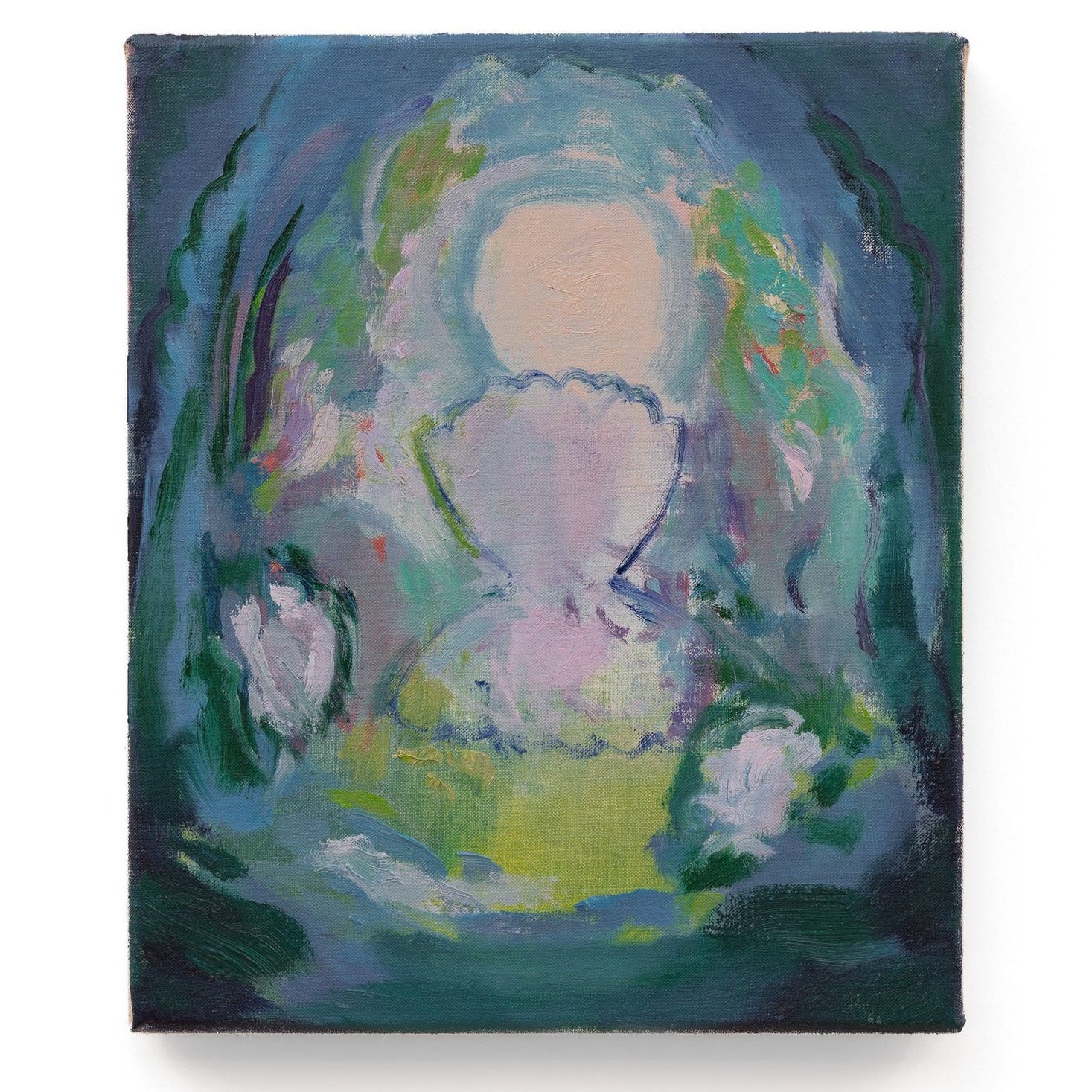
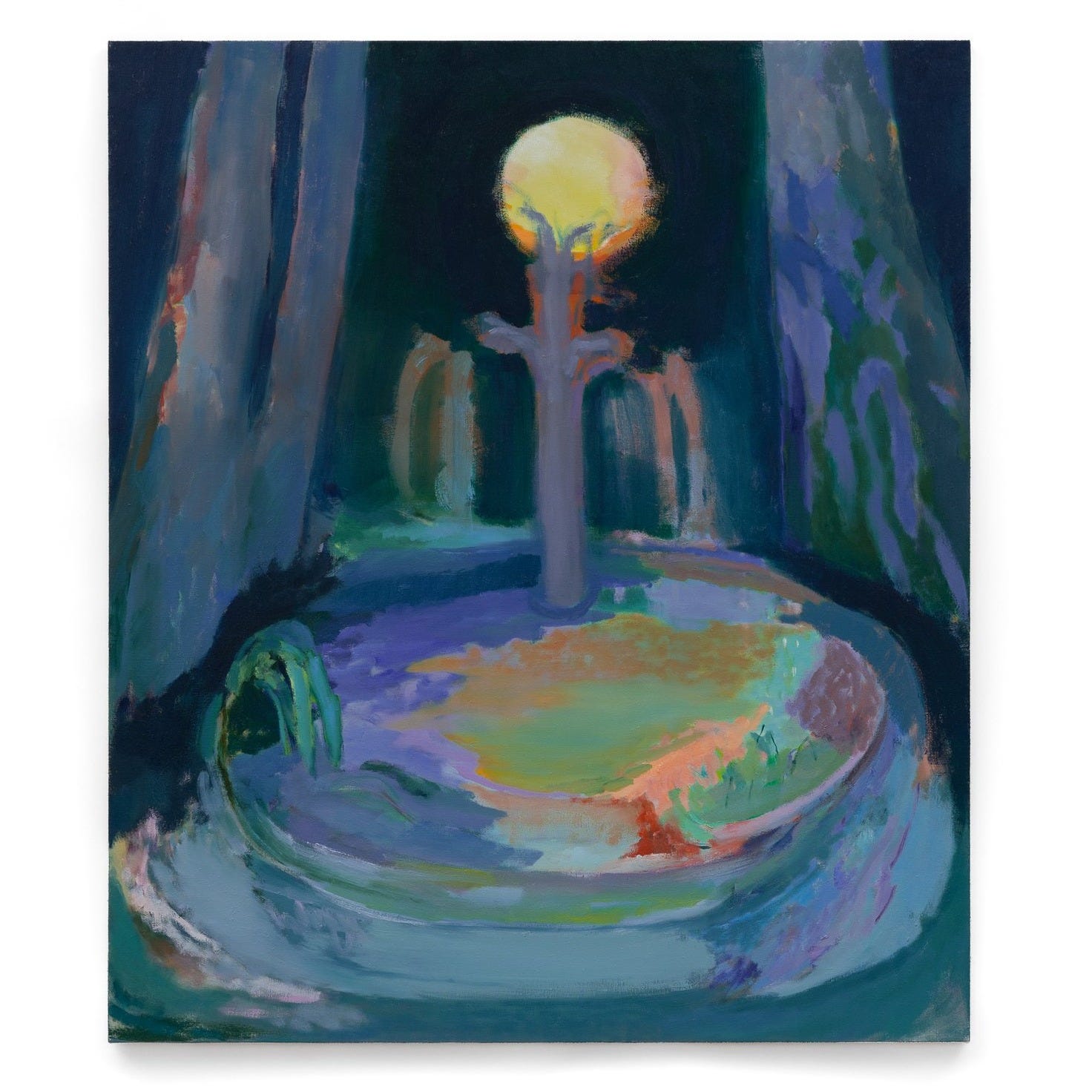
The rich pigment of emerald green plays a crucial role in the color palette of this exhibition and creates a thoughtful through-line amongst the pieces. While nontraditional as landscapes, these paintings create their own natural world wherein green becomes embodied as a harbinger of vitality. Works such as Hope in the Dark and The Pearl strategically employ light to hint at the possibility of transformation within each painting. A bright orb casts soft shadows across the water’s surface in Midnight Sun, bringing a refuge from the surrounding murky and dark background. In other instances, light breaks through clouds or serves as a central focal point drawing the viewer in. The presence of fountains serves as an endless source of life, their free-flowing water a symbol of perseverance. In this way, the paintings on display present reverently in the space of the gallery. Hope abounds within The Echoing Green if we so choose to look for it.” —Luiza Lukova, Press Release via Nationale
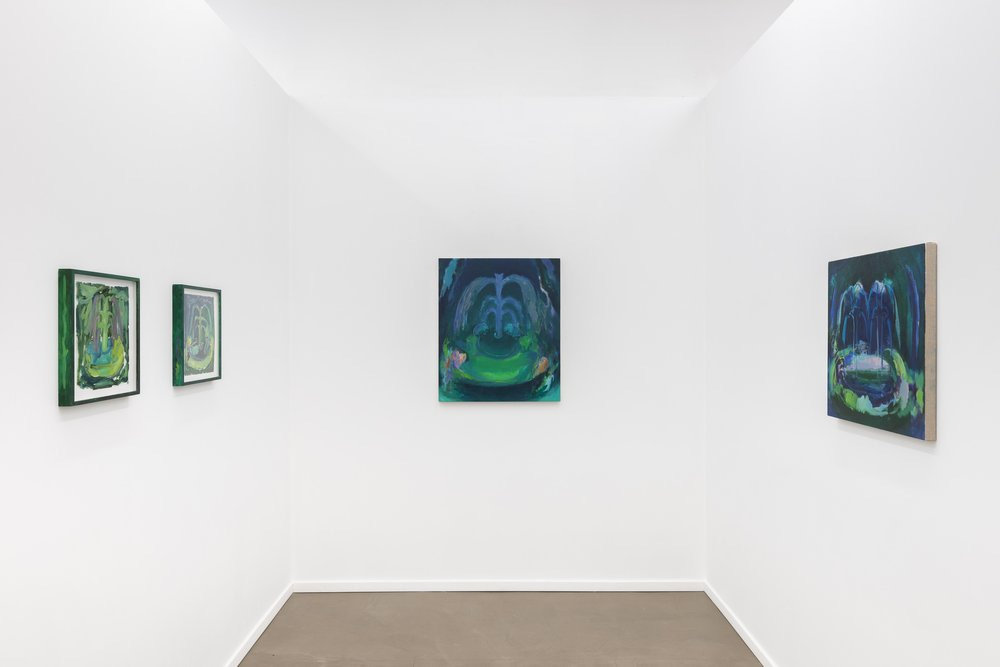
Photos by Mario Gallucci, courtesy of Nationale.
Event details
Conceptualizing Mothers in Art & Writing is a panel discussion that brings together Portland authors Frances Badalamenti, Chelsea Bieker, and visual artists Francesca Capone, and Anya Roberts-Toney to share how they conceive of mothering in their work through both written and visual means.
This generative conversation (moderated by Emmi Greer, Editor of Buckman Journal) will dive deep into the opportunities and challenges of making creative work about motherhood while also living as one. We will collaboratively discuss mothering as a concept, an archetype, a generational practice, and an ongoing discourse.
There will be light snacks, tea, and time for a Q&A. It’s a no-shoe joint, so wear your best socks. Purchase tickets here.