

Urban Hike #2
a photo-story by Kris of the Buckman team


The sun is out, and so I decide to walk from my spot in Southeast over to a photography store up in Northwest, by way of downtown. In some ways, the west side of the Willamette feels like a different city. Hills sit on the horizon, bordering Forest Park, where the more affluent can tuck themselves away with sweeping views of the entire town, and as you move in closer, there’s—from South to North along the river—a hospital campus, Old Town, a university, downtown, The Pearl, and Slabtown. Beyond that, there’s a stretch of warehouses and industrial plants. This section of Portland is quite small in proportion to its eastern counterpart.
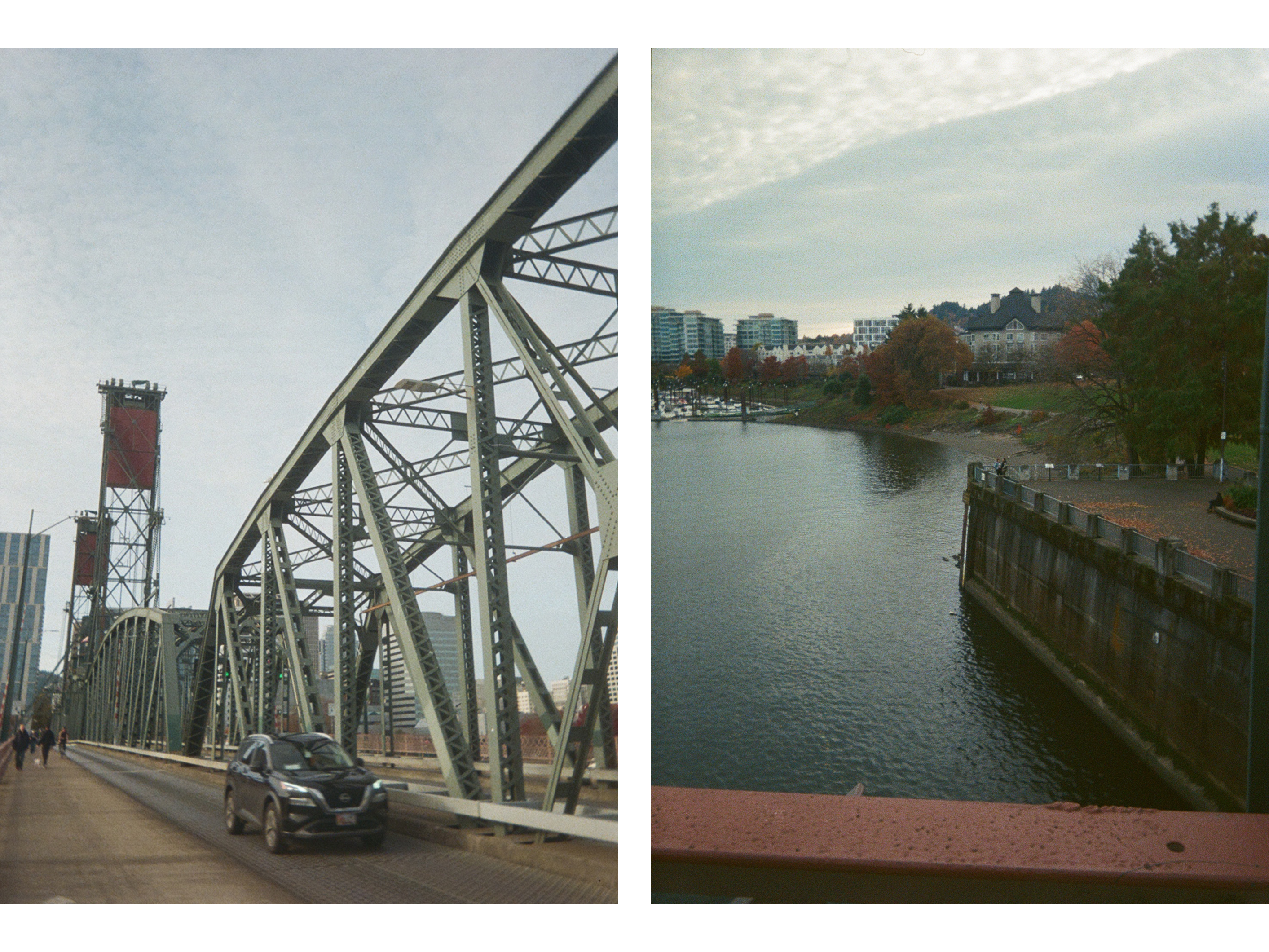
From where I’m at, it’s most convenient to cross into downtown on the Hawthorne Bridge. It takes about 15 minutes to walk to Waterfront Park. I’m not very dialed in to the going-ons and so I’m always finding out about a festival being put up or taken down in real time. Sometimes the park is full of sailors, sometimes there’s a rowing competition, a market, a parade, a rally. I never know what to expect.
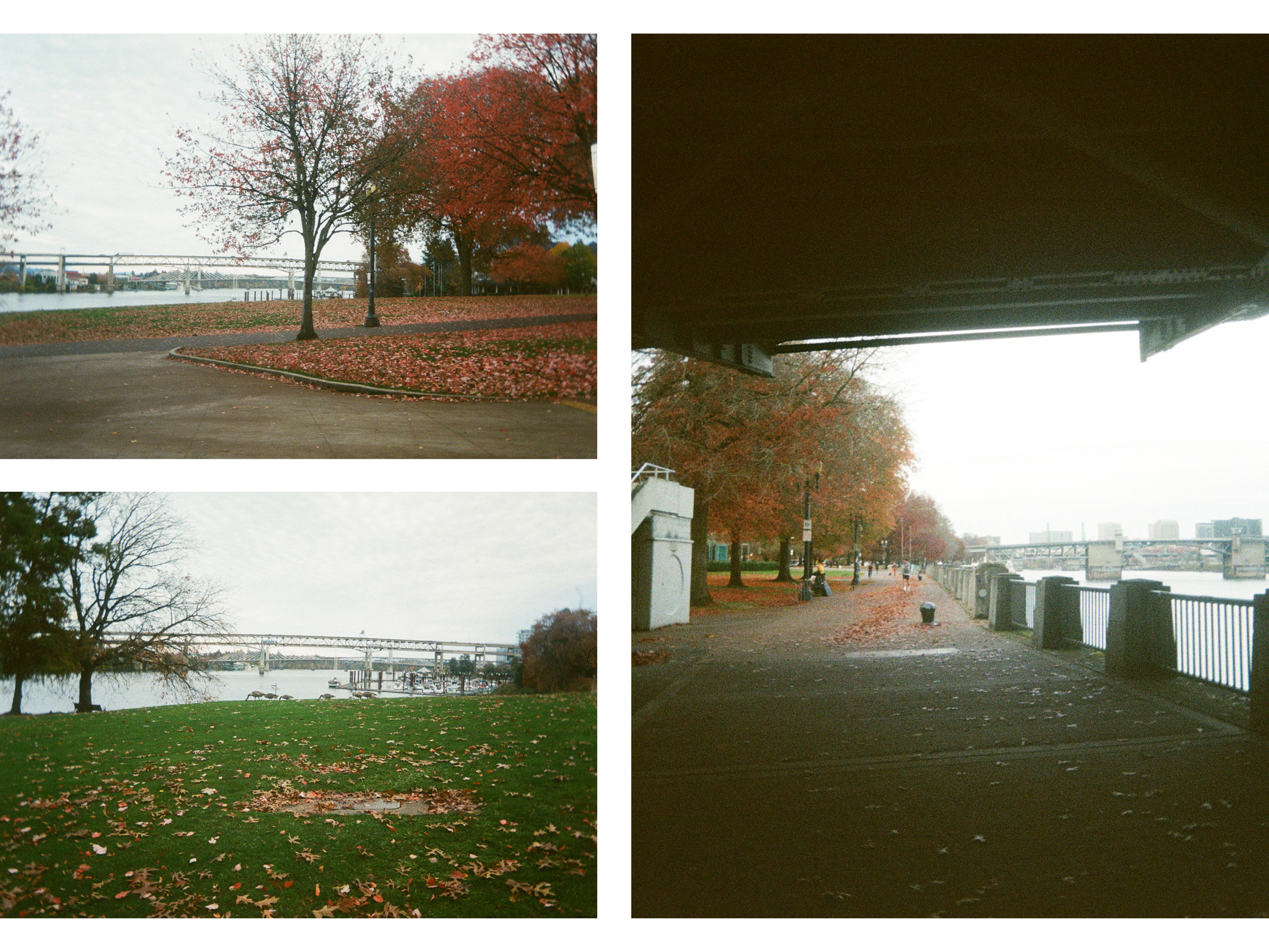
Today, the park is quiet. There are a few runners passing through, folks commuting by bike, a fella taking a nap on a bench. My favorite kind of day. Sun’s out, no crowds, just enough people moving about.
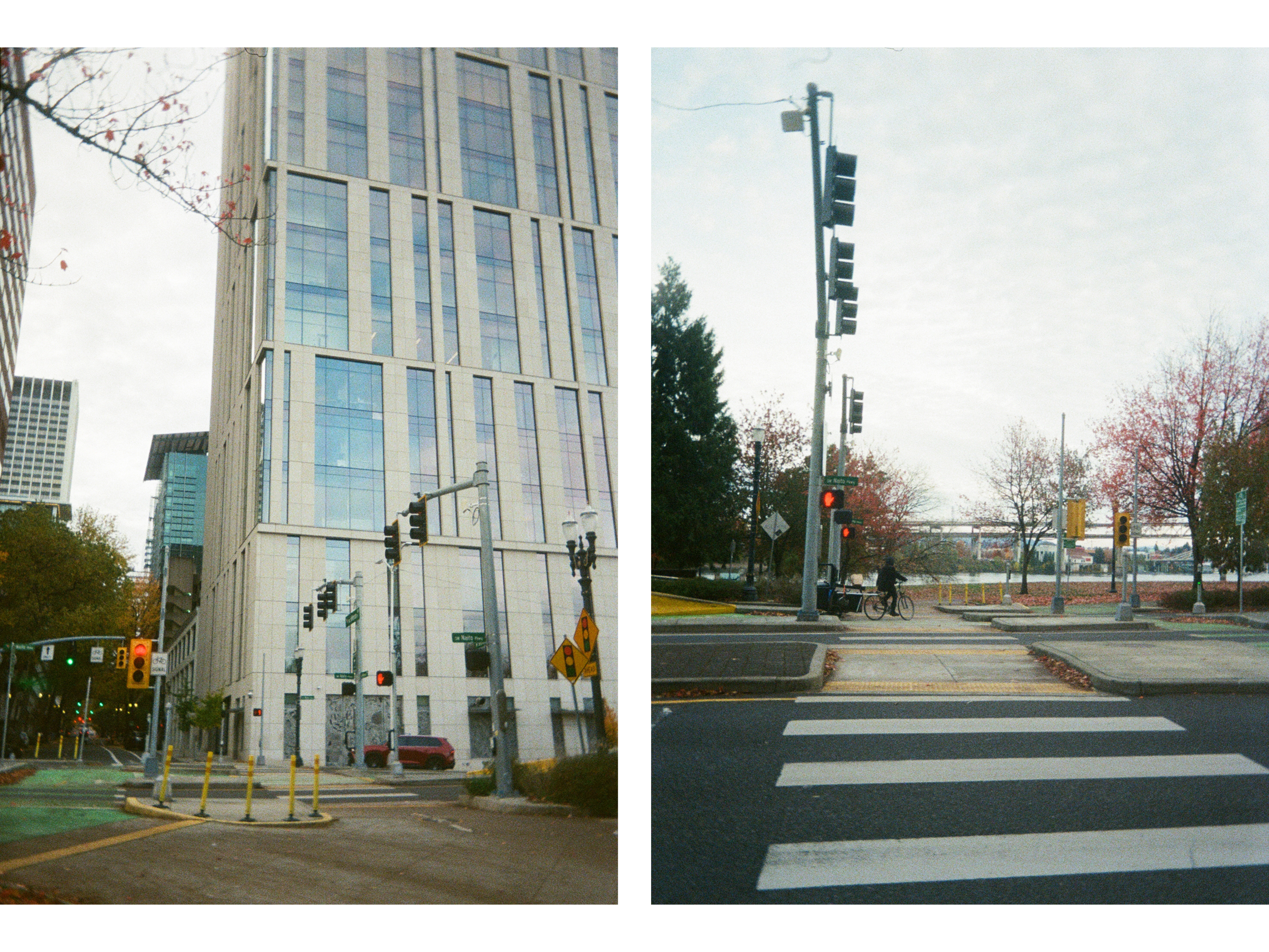
I take a more direct route to the photo store, still favoring familiar streets and overpasses. I hear drums and detour near the library where I come across a Fry Bread Festival: Indigenous music, wares, people. A comforting reminder of my hometown—I take in the smell and sound, browse a few booths, but decide against taking photos. Keeping to the south side of Burnside, I continue on.
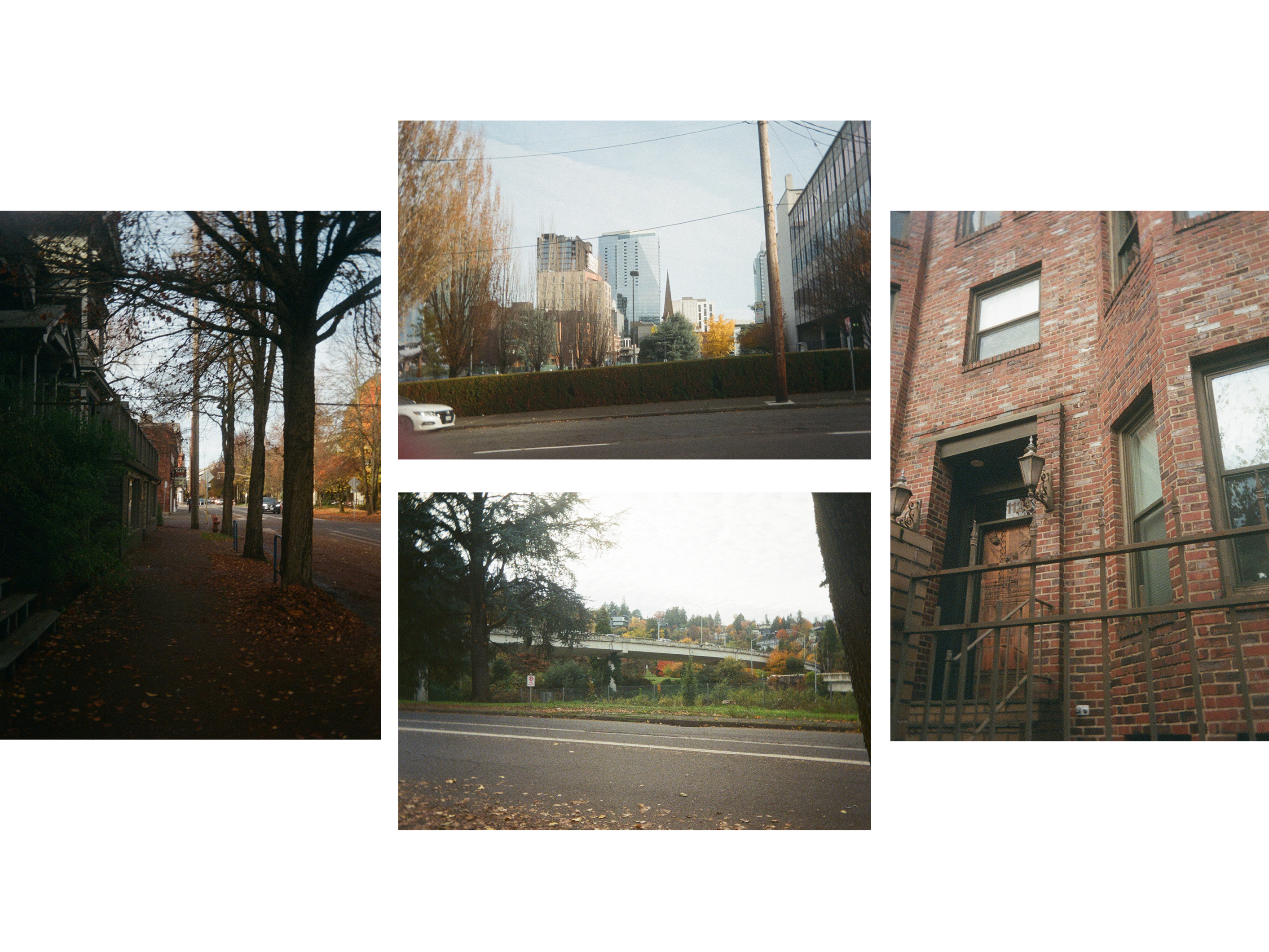
The first time I visited the PNW I was enamored with the vines that ran up the sides of overpasses. All the moss and fern, which grew despite tar and concrete. I take some pictures looking across at the Pearl from a funny little sidewalk which sits isolated between the highway below and another road. I notice giant boulders placed meticulously at the edge so no one can set up camp, but rocks collect trash anyway. Across the street, there is a mix of new and old buildings, apartments and smaller residential homes.
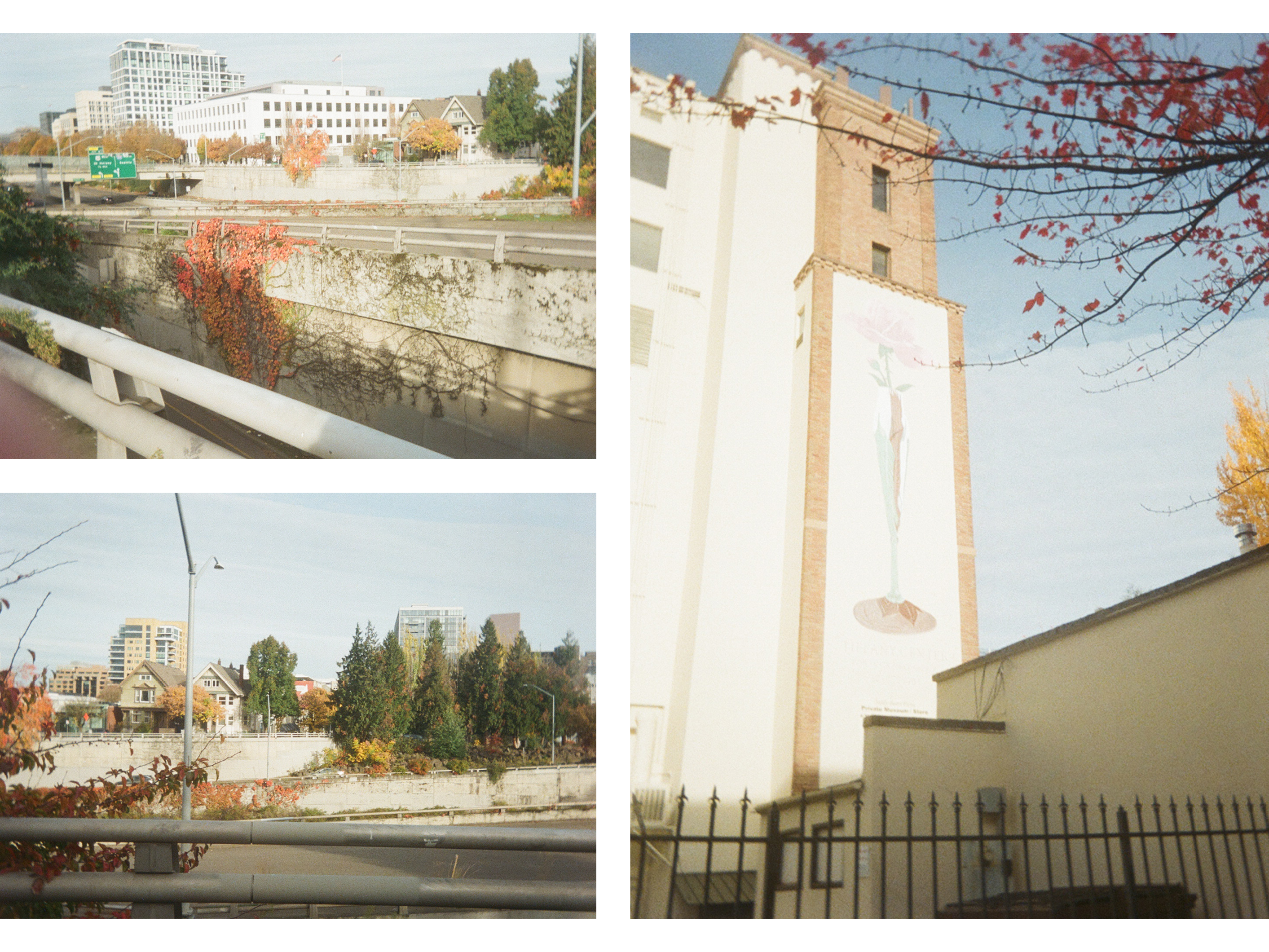
Going without a car in Portland, I’m privy to a unique perspective of the city. I know my way around via bus lines and bridges to avoid on foot. I know the easiest neighborhoods to navigate on bike and which ones have too many hills. I’ve also come to recognize many faces of the folks living on the street, the areas they stick to, how they act on a good day versus a bad one. I learned to be more aware, how to check in with some people and give others space. Be kind and keep moving. To me, it seems cars give people an illusion of safety. Safety from people on the street, perhaps from the weather. Safety from having to directly or meaningfully engage with the community they live in on a daily basis or maybe just freedom to choose when. I generally feel safe walking around this section of Portland, my biggest threat being the occasional distracted driver.
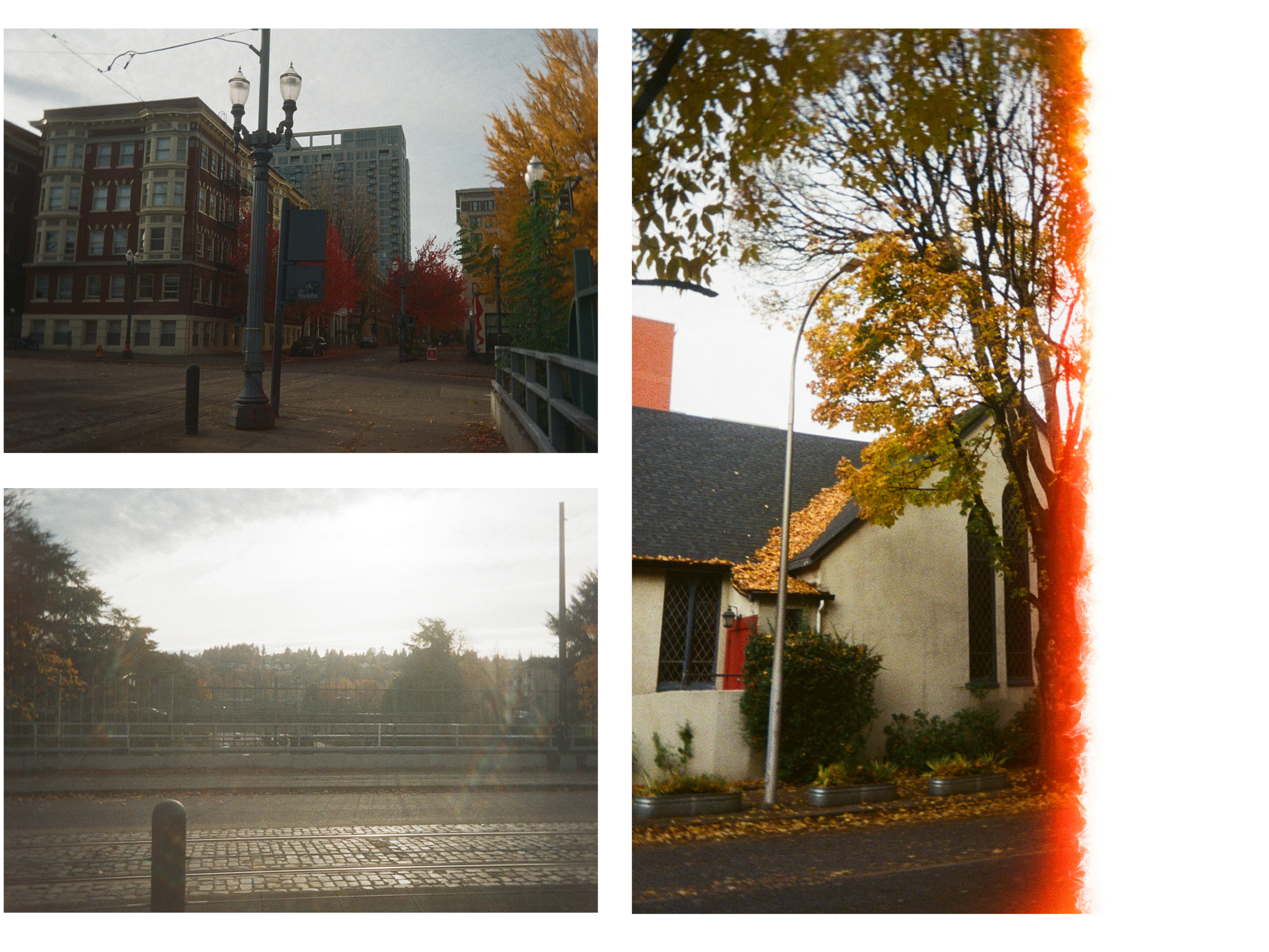
After dropping off film in Northwest, I cut back through Goose Hollow into downtown Portland. This time, I take a longer route by walking the outer perimeter of the PSU Campus, following that same highway in the opposite direction. The Southwest hills loom overhead, and this pocket of Portland is much quieter. I notice the absence of hacky-sackers on this beautiful sunny day. I wonder how the college experience is impacted by living in a city versus a “college town.”
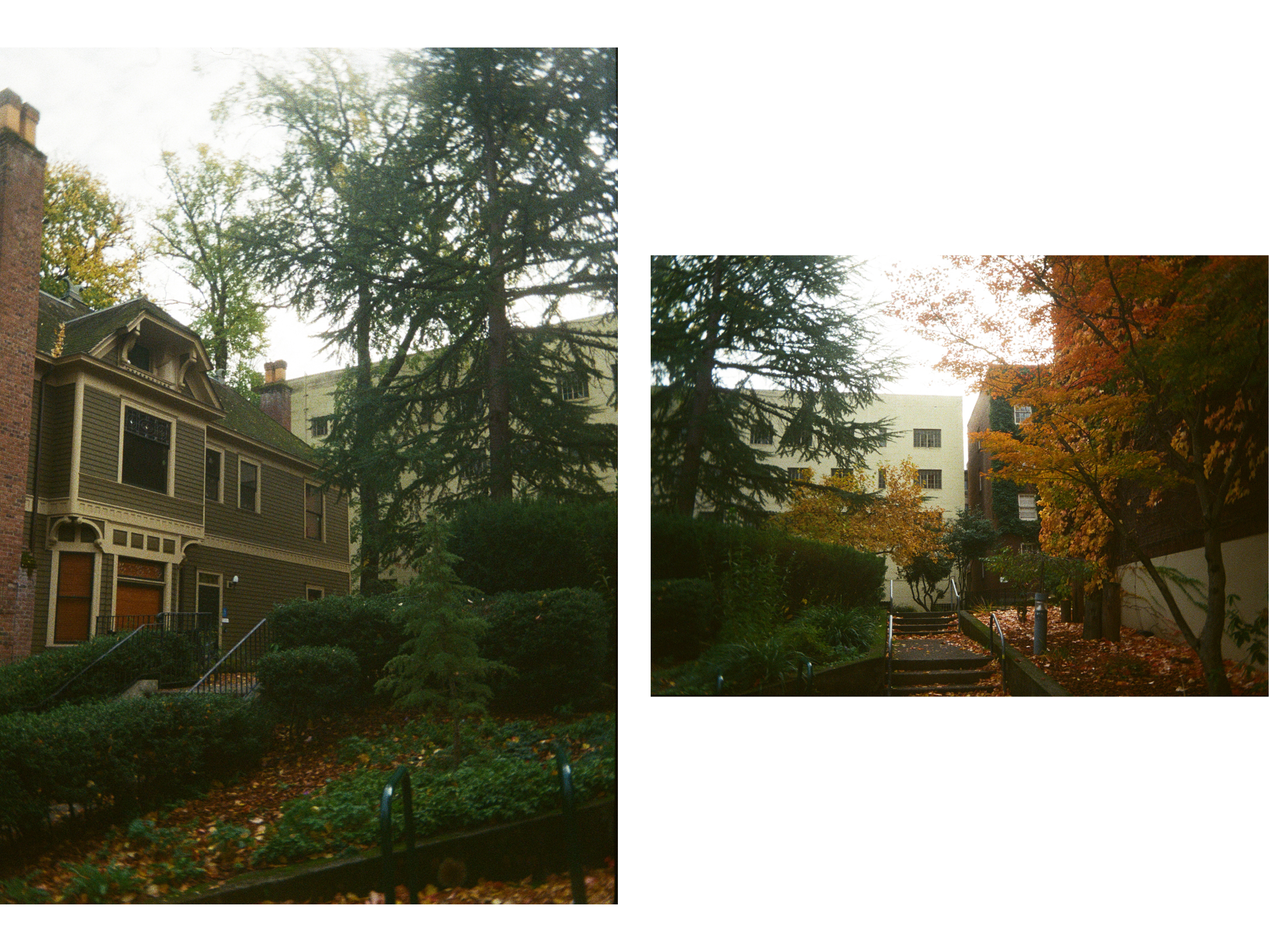
I appreciate the walkability of any college campus. At the center of PSU, there’s a park with paths that lead directly to building entrances. Roads and parking lots are on the opposite side of the buildings and through streets are planned with pedestrians and cyclists in mind. Downtown Portland existed before the campus expanded, so this isn’t the case everywhere—just the 6-block stretch of Southwest Park Avenue, which extends another 6 blocks into downtown where the Portland Art Museum is.
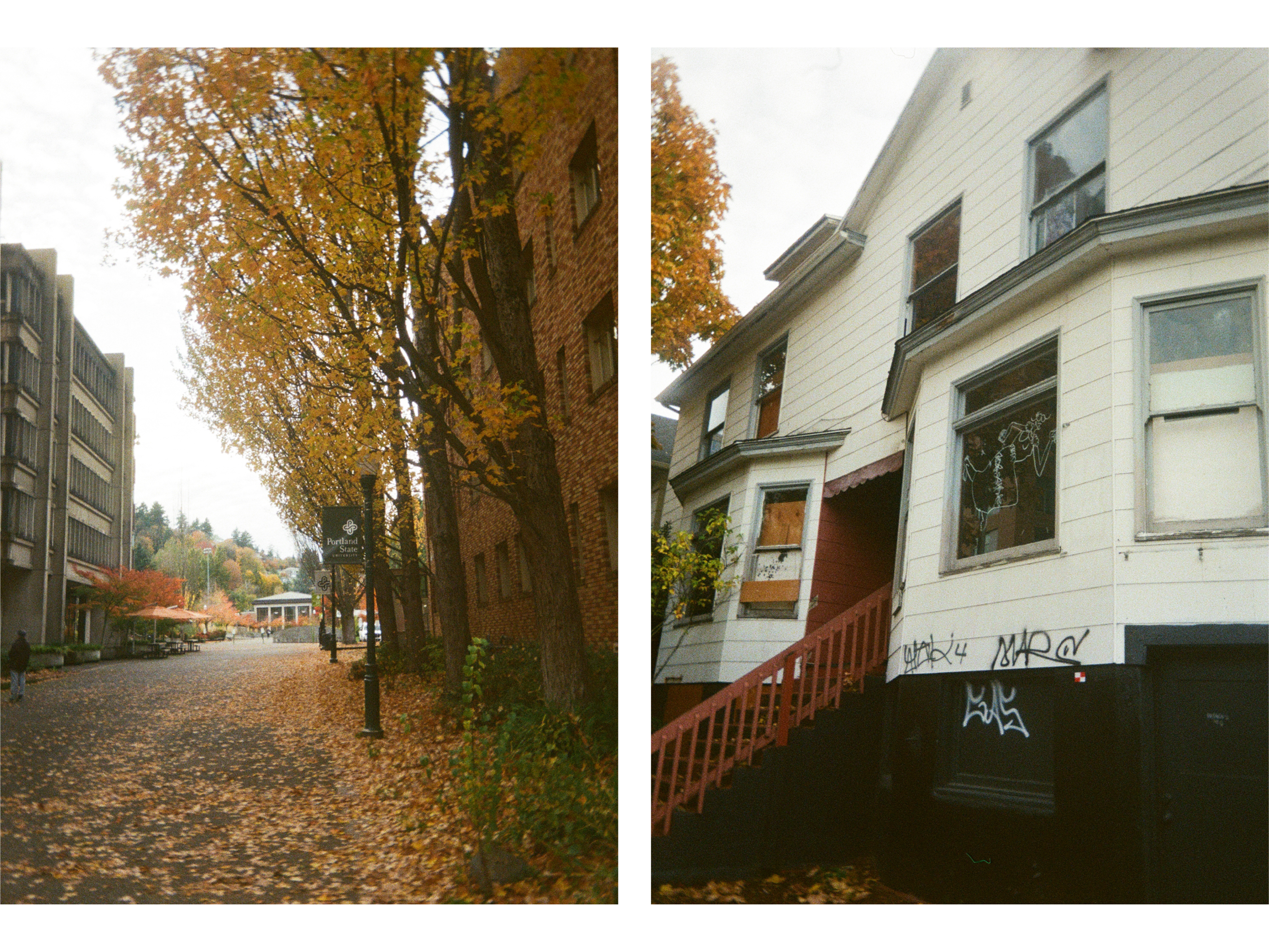
“Walkable communities” feel particularly unique to college campuses in the U.S.; hubs where all your needs can be met, by design. Post office, medical center, housing, grocery, public transit. All available and accessible without a car. A value that gets lost with expansion and suburbs.
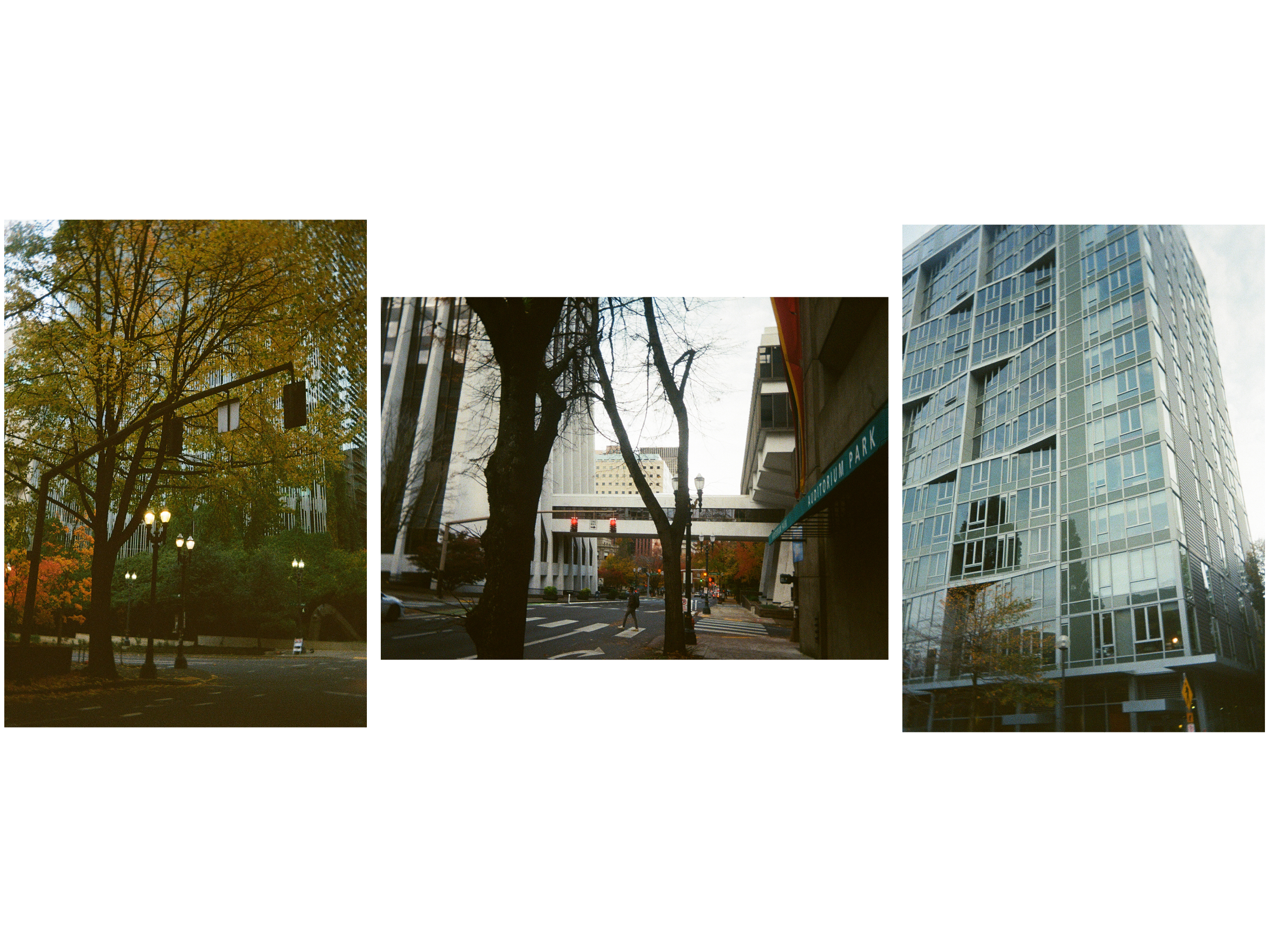
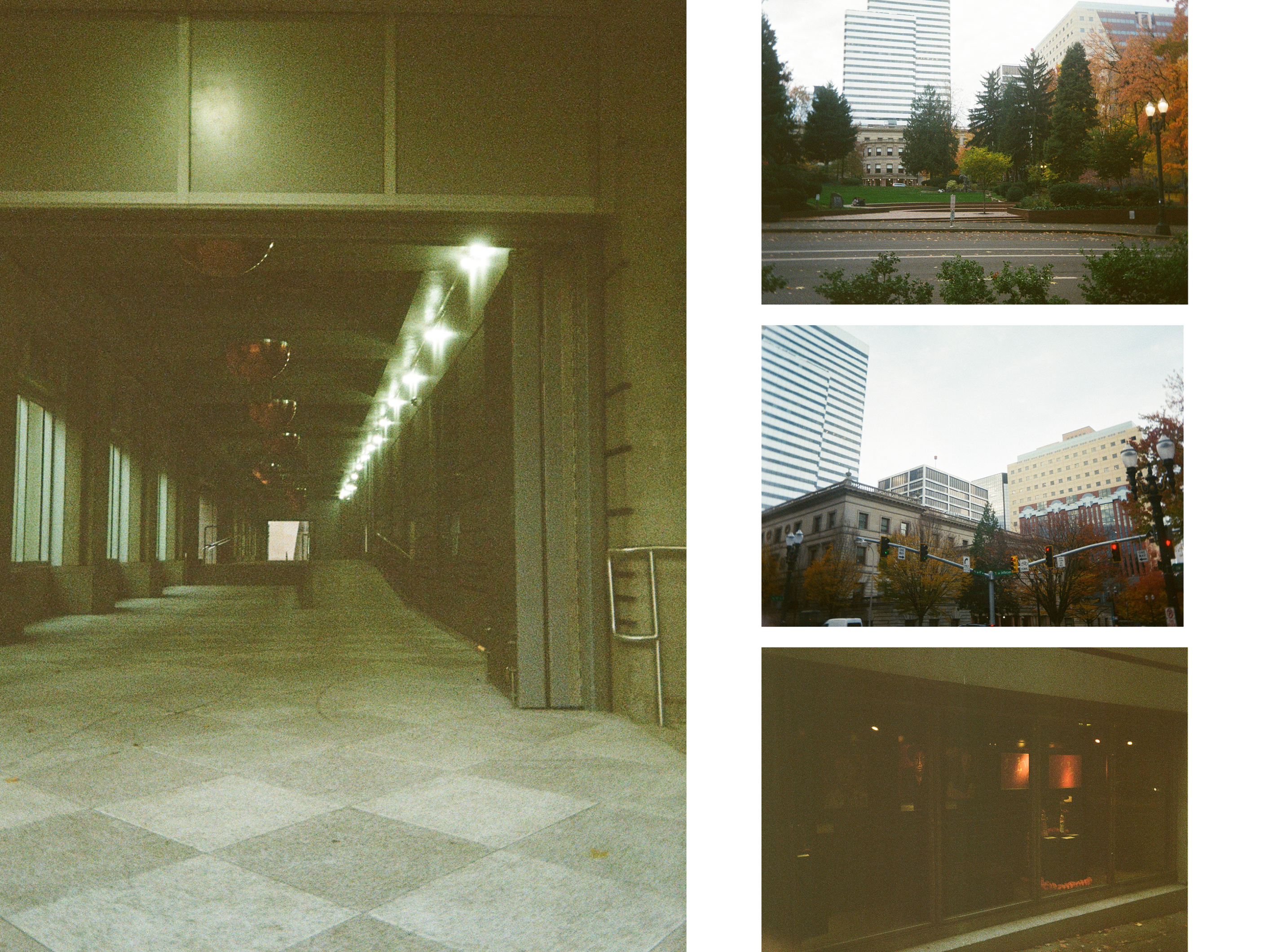
My walk on campus feels brief and I’m back downtown. The sun is setting as I pass the courthouse which is no longer fenced off. Other buildings sit empty, boarded up windows decorated with large, colorful murals. People walk around, cars pass by, and Portland continues on. The flaws of this city seem impossible to ignore because people care. There is civic engagement, there is action, there is response. People show up to imagine what else could be. There is a gallery installation, which utilizes the window space in some of these vacant buildings showcasing local art to passersby. Temporary spaces become something beautiful, then disappear again.
 | A guest post by
|